Showing posts with label writing. Show all posts

Saturday, May 18, 2019

Word Play – All Hail The King


In the shadow of the US Bank Stadium, writers, readers and book peddlers gather in the make shift Minneapolis tent village, crowding the closed streets, haggling over words, sentences and paragraphs, and whispering in hushed tones, “Soon the master will be here.”
“Imagine” by John Lennon is being piped out over the crowd when I show up. And I wonder if these are the same people who sold out First Avenue last night to hear the Rock Bottom Remainders. I suspect they are. Why should they be any different from me? Here to witness the same phenomenon, the head horror writer in charge, Lovecraft’s current channeler on earth—Stephen King.
He doesn’t go on until 10 AM, so I pick out a spot fairly close to the stage, but far enough back I’m out of the crowd—at least for now. The morning is relatively pleasant. It’s sunny, there’s a spring breeze, classic rock plays along with a steady bongo drumbeat somewhere that has me thinking “Renaissance Festival for Writers.” Commercial interests are represented, mostly by Target reps in red shirts that hand out sunscreen and sunglasses, all with the Target logo.
I scan the crowd for writers I know—and come up empty. But there are enough people here they could easily be hidden in the growing mass of people. “I Feel Like Making Love” comes on, and the Ren Fest feeling now gives way to more of a “carnival for writers” vibe. I also think that in a King novel (Cell, for instance) this would be the moment right before it all goes bad, before people start going mad and biting each other. I take a step further back from the growing crowd, eye-up the exits.
A woman in the crowd asks me how Instagram works on her phone (I’m no help). Another woman, about four feet tall and at least eighty years old, leans close to me, enjoying the shade I provide. When I take a step away, she moves closer again. My toes are run over by a stroller filled with two sleeping infants and their mom yells “toes!” in surprise, and jokes with me that “You probably didn’t need those anyway.” No harm done, I concur. There are clearly a variety of people here, and most of them, it seems, are here just like me, readers or writers, waiting to see King.
“Dangerous Type” by the Cars plays now. Somewhere past the wall of people, King must make a brief appearance as he heads towards stage. A flurry of hands and cheers all go up at once, and stop just as suddenly as he ducks out of site. I can’t help but wonder if this is where fame gets you. People yelling and waving at just a slight glimpse. There are so many of us now in this crowd, my mind jumps to a scene in Jesus Christ Superstar: Jesus and the Lepers. “There are so many of you!” I hope King gets something worthwhile from this—besides big bags of writer superstar money, that is. I hope it’s worth it.
When King is finally introduced and makes it on stage I mostly see him on the big projection screen they have set up. He has a casual manner, and a wide, friendly smile. He shows his age a little: gray hair, a bit bent of posture, very soft-spoken.
Benjamin Percy, local author (of some fine books like Thrill Me and Red Moon) interviews King, with full disclosure, that they will mostly talk about one of King’s newer books, The Outsider (I’ve read it, not bad—the first two-thirds were great, the ending felt familiar to me, reminiscent of It).
King is so much fun to listen to, and between him and Percy they had some great things to say about reading and writing and horror. Here are a few gems (tried to capture as best I could, please consider most of what follows “paraphrased”):
·      King complimented the crowd for being “People who read shit.” (Meaning: great that they are readers)
·      “If you can read and write you can own the f•cking world.” - Stephen King
·      He spoke of how many people have written him to say our current president reminds them of Greg Stillson, the president in his book The Dead Zone (The first thing I thought of when Trump was elected.)
·      A few times he talked about how his books end, in this manner: “I’ll find out the ending in the course of writing the book.”
·      He’s a Game of Thrones fan.
·      Random thought/observation: The closed captioning at this event was bordering on hilarious. I’m sure it’s tough—I couldn’t keep up if I were typing, but here are a few captions I noticed that made me smile:
o   Supernatural Beans (beings)
o   Needful Chinks (things)
o   Swagger (Jimmy Swaggart)
o   Kid tanning on the window (tapping)
·      Some projects King has in the works
o   A sequel (perhaps) to Salems’ Lot
o   The Outsider will be a Netflix series
o   If It Bleeds (new novel coming out soon—it sounds good!)
·      A joke by King:  “So far so good: What the guy who jumped off the roof said as he was passing the 40th floor.”
·      What does King write about? He says he writes to the point that monsters are real—and sometimes they win. He likes to write about people falling apart. He also talked about how all people have secrets, and used the example of Ted Bundy, who did terrible things yet to most people around him, they only saw a handsome, charming guy. He also uses his writing to pass on his fears and traumas to others (why pay a psychiatrist when people pay him to read his fears).
·      King also spoke about how in these (current, terrible, scary) times people are frightened, and that writers have a responsibility to write about what frightens them.
o   His upcoming book If It Bleeds may express some fears about Alzheimer’s and dementia. (A writer’s tool is his mind…)
·      Some things that King spoke of fondly:
o   Wait Until Dark (an old movie with Audrey Hepburn)
o   The Shrinking Man (Incredible Shrinking Man)
·      On fame: “Writers should be like Clark Kent.”
·      “Minnesota is a great place. You’re lucky to live here.” – Stephen King
·      “It’s a strange life.” – Stephen King
·      How good writing should be: “A hem stitched so fine…” (meaning so well written people can suspend belief)
·      Side note by King and Percy: the director, John Carpenter, apparently keeps a “File of Scares’—creepy images—that he uses to work from.
As King spoke the crowd grew. Some of the most interesting people in the audience, to me, were the ones who walked on by, who never looked at King up on stage, or even paused. One of the most popular writers on the planet is up on stage—and you can’t stop to listen in for a minute? I just don’t understand.
This is my third time being in a King audience—and I love to listen to him expound about writing. But why shouldn’t I, as someone who has read 40+ Stephen King books? I’m plenty biased.


One other moment I got to experience, thanks to The Loft’s Word Play event (and my thoughtful wife who bought us tickets for our anniversary), was to hear King and the Rockbottom Remainders play a blend of classic rock songs, most that I recognized as cover tunes from my father’s old record collection. Hearing this group of writers sing “Paper Back Writer” was wonderful, and as another writer friend of mine said, “Hearing King sing Stand By Me was a dream come true I never knew I had.”
Ditto.

~Mark
@manOwords

2018 - In Remembrance


On this blog, you won’t find any entries to mark 2018’s passage. Some say this year didn’t happen—but I am here to tell you, it did.

For me, 2018 was a year of changes. For one, I was on a break between full-time jobs. Late 2017 my IT Manager job of many years ended abruptly in a financial lay off that took about 40% of staff with it. The good news is this layoff came with six months of severance pay so I could take my time to figure out what to do next.

The first half of 2018, for me, was kind of a test run on other jobs, and maybe also a test run on what it will be like (for me) to be retired. I hope I make it to see that day, because I really enjoyed the taste of it I had in 2018. During that time I got to explore new opportunities, but also spend my time doing only exactly what I wanted. It was liberating.

A few things I can vouch for, that happened (in my life) in 2018:
  • Being an Intro to Creative Writing teacher—which I loved. I am so appreciative of the whole experience: Hamline University, my students, and my fellow teachers—and the whole chance to be emerged in thinking about/teaching/talking writing.
  • Job hunting: Writing resumes, going on interviews, taking career assessments, attending job fairs and networking lunches and coffees.
  • Getting a new job as a tech geek at UMN
  • Living life. 2018 had graduation parties, a funeral, a wedding, a car crash, birthday celebrations, and a retirement. I also played billiards, climbed a rock wall, and attended a couple rock concerts.
  • Writing: much of my writing in 2018 revolved around starting my thesis. As my thesis project I chose, Sunlight, my book project that I’ve written about in this blog a few times. Through thesis I added to, revised and honed the first third of this book—and got lots of feedback on it from my professors, but also members of the Scribblerati. And our writing group met to talk writing and give each other feedback 4 times (that I can recall in 2018).
But in 2018 we didn’t blog. No, no, no. Maybe 2019 will be different? Maybe not?

What was 2018 for the other Scribblerati? For you? Anything you’d like to remember—or forget about it?

I look forward to your comments on a year I know happened, when blogging didn’t.

Mark
@manOwords

Thursday, April 20, 2017

Character Assassination

Post originally published on Finding the Yummy.

What can ruin a good story for you?
For me, if I don't care about the characters, I won't care about the story. I felt that way while watching the film Public Enemies - John Dillinger was a horrible person, and I couldn't invest any energy in caring whether he was caught or betrayed or killed. His charisma wasn't enough to make me care, the cat-and-mouse game he was playing with the Feds wasn't enough to make me care, his Johnny Depp-ness wasn't enough to make me care. I was completely detached from the film, just waiting for it to end. (And trying to spot my friends Bill and Shannon Butler, who were swing dancing extras in the movie - the only thing that made watching it worthwhile.)
Femme-Nikita_2
Likewise, I have a friend who hated La Femme Nikita, because the title character murders a cop in cold blood at the beginning of the film, and he couldn't forgive her for that. Never mind that the story was about transformation and redemption - and about how society says it's okay to be a monster, as long as you're a monster on the right side of the law.  (Yeah, I loved it. But I get why he didn't. )
We all have sins we consider unforgivable.
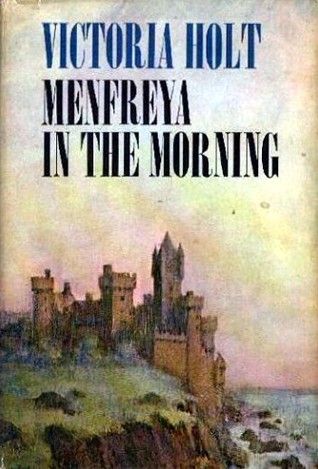
I just finished reading Menfreya in the Morning, by Victoria Holt. It was written in the 1960s - a Daphnie du Maurier-style Gothic romance, set in the early 20th century.
I was liking it a lot, the style is spot on: sweeping rocky coasts, a glorious old manor gone to seed, horseback riding accidents, political scandals, rumors of a ghost in the east wing - the whole Gothicky works. The main character, Harriet, is likable: a lonely, odd, smart girl with a despised limp, who ends up capturing the heart of Bevil, the man she's been in love with since she was 10 and he was 20. He's a gorgeous Lothario, and the most eligible bachelor in all of Cornwall. Even after they get married about half way through the book, she can't really believe that he wants her - he's had a lot of affairs in the past and still flirts with women more beautiful than Harriet.
Menfreya
The marriage happens early on, because the rest of the the story is tres Rebecca: what with the dark suspicions about her husband's infidelity, the ghost in the east wing, the sinister governess and all. So, although they have an ideal honeymoon, when they get back, those little dreads begin to take hold. One night they have a major disagreement over Harriet's best friend, who is also Bevil's sister. After the argument, Harriet is furious with him, and announces that she's going to sleep in the other bedchamber. He says no, he wants her there with him. She refuses.
Aaaaannnnnd he rapes her. It isn't spelled out as such, but it's pretty clear what happens... her arms and back are covered in bruises the next day, and she describes it as "the most soul-shattering experience of her life."
Okay, I thought. Do I put the book down now? But Holt doesn't pull her punches. She takes care to express the rage, humiliation and fear Harriet feels, and especially the loss of her autonomy, the realization that whatever she wants, he's stronger, he's her husband, and she has no way of fighting back.
Meanwhile, there's a kind young man lurking vaguely in the background, and I started wondering whether Harriet was going to ultimately end up with him. Would her husband die? Then I thought, wow. This is a totally different book than I thought it was going to be.
EXCEPT IT'S NOT. Harriet makes excuses for her husband, and eventually learns that she was wrong about the sister, and he was right, and all her suspicions about Bevil's infidelities were unfounded, and he really just loves only her and she loves only him and those two crazy kids work it out, by gum.
Fuck you, 1966.
What story was ruined for you by a character's actions?

-Q


Monday, October 17, 2016

New blog


Hey there, friends of the Scribblerati!

Long time no see, huh? Our blog has been silent lately, but we aim to change that! Claudia posted last week about Two Sentence Horror Stories, and now I've got a post up all about where I am with my writing. The trick is, though, the post is over at my personal blog.

So, if you're interested, click on over.

I hope you enjoy it,
Jon

Tuesday, October 11, 2016

Two Sentence Horror Stories: A Challenge!

In honor of Halloween, I've been looking at Two Sentence Horror Stories.
There are tons of them out there on the interwebs. Some are amusing:


 a few are quite good: 


but most are predictable: 


And very few are complete stories:


Think about it. You can imagine that entire short story, fleshed (pun intended) out, beginning, middle, and end. Would it be worth writing out in full? Probably not, unless the author was exceedingly clever in their execution. Again, too predictable. But, as a Two Sentence Horror Story, well done. 

But wait! Before I get all judgy in my judgebox - maybe I should try it myself. 

*some time later*

Oh, crud.

Not easy. 

But here's my attempt. 


Martha knew Janey's secret: the ever-growing belly she tried to hide under layers of boys' shirts and baggy sweaters.

As they walked deeper into the woods, Martha had a secret hidden beneath her clothes as well: their daddy's biggest hog knife. 

Cons: Not a complete story. Maybe too wordy? (Always my bugaboo.)
Pros: I think this raises a lot of questions, and gives readers room to speculate. I flatter myself to think all the possibilities are pretty creepy. 

Whatever you think of the results, it's a terrific writing exercise. You have to be concise, and you have to be very specific. With such limited space, I found myself carefully choosing every word to paint a picture of who these characters are, and what motivates them.
Imagine approaching every line in your novel with such care. Somewhat exhausting, but I imagine the results would be worth the effort.

So then. If you dare, post your Two Sentence Horror Story below. Let the games begin! 
This is hard, but fun. No one will judge you harshly. Give it a whirl!

-Q

Sunday, May 29, 2016

Story Ingredients: What Makes a Story Great?

As some of you may know, I’m currently a Creative Writing grad student. In the last class I attended, the focus (and indeed the title of the class) was “The Successful Story.”

The professor of this class and my fellow students were all fabulous and throughout the course had some great insights and commentary about what makes (or breaks) a good story. During this class I also had the opportunity to read more than 80+ short stories—some by established/published authors, some by fellow classmates, some by aspiring writers hoping to get published—and discuss what strengths and/or concerns each of those stories had.
Fist Full O' Short Stories

One of the key learnings for me from this class—and this quantity of short story reading—is that it is a rare thing indeed for a story to be perfect, to not have a concern or two, no matter how well written or thought out. Likewise, it is also rare to have a story with absolutely no merit—that even if there are certain glaring problems with a story—often there are good things going on in the writing as well.

Another take-away for me is that not all readers (or editors/publishers) have the same criteria for what might make them love a story vs. hate it. For instance, for some readers having grammatical problems in the prose is a “deal breaker.” For me, as a reader, I’m not as concerned about that (and can forgive it to an extent), but if I don’t feel some emotional response to the story, or like at least one of the characters, in the end I probably will not like the story—if I finish reading it at all.

Following is a list of key story components (some from my scrawled class notes) that might help make—or break—a story.

Plot structure
-           Scenario
-           En media res (start in action)
-           Strong first line, paragraph, page  (I heard author Joe Hill say recently that your most important thing that happens in the story should probably happen on page 1)
-           Strong ending? (Endings seem to be hard to get right)
-           Clear conflict? Problems stated up front to help move the story (Hook!)
-           Back-story
-           Flashbacks
-           Layering (complexity—more than one thing going on)
-           Timing
-           Twists?
-           Promises fulfilled (character earns the reward)
-           Ambitions of story achieved
-           Climax (involving key players)
Characterization
-           Character change (or lack of change) during story
-           New insight or understanding by character
-           Motivation – is it clear immediately what the character wants?
-           Flawed, interesting characters
-           Indirect characterization
-           Seeing how main character interprets other characters (relationships)
-           POV (point of view)
-           Convincing dialogue
-           Empathetic characters (give me someone to care about)
Beautiful writing/prose/craft
-           Vivid, sensory details, descriptions
-           Given only details that matter
-           Strong syntax (sentences, imagery)
-           Realism or surrealism
-           Showing in writing (vs. telling)
-           Letting reader conclude what is going on (don’t over-explain)
-           Does the story take risks? Stylistic or thematic
-           What’s unique about the story?
-           Strong voice (umph! not bland)
-           NOT passive voice, vague details
-           Mastery of language, unity of purpose
World Building
-           Setting (details)
-           Strong sense of time
-           Strong sense of place
Pacing
-           A reason to keep turning the pages
-           “Cliff hangers”
-           Character motivation and goals
Emotional Response
-           Menace/danger/tension
-           Good times and bad times for character
-           Does the story have deeper meanings? Does it say something about the human condition or society?
-           Is the story memorable?

So there you have it—over 40 components that an author could consider and labor over in a great story. Did I miss any?

For you as a reader or writer, what’s the most important writing component to include—or get right—in a story?

Do you have a “deal breaker(s)” where you will stop reading if the author gets it wrong?

Mark

@ManOwords

Monday, June 22, 2015

Japanned


Hello again!

It was supposed to be my turn to post something here at the Scribblerati blog on Friday, but it completely slipped my mind. Super disappointing, I know. My apologies. The good news is, the only reason it slipped my mind is because of my currently very full writing schedule.

For example:

1. Our next meeting is on Tuesday, so I need to finish my critique of Shawn's current WIP.

2. I'm continuing to work on my own WIP. It's an on-going process, but I'm pretty happy with it. In fact, it's coming pretty easy at the moment, at least for the next few chapters... there's a hazy part ahead, but... well, whatever, like I said: I'm continuing to work on it. I'm hoping to have a finished draft by...Mmmm... September-ish? Maybe October is a safer guess. Either way, it continues.

3. However, I've been most distracted recently by my own blog. My wife and I went to Japan last month, and I took notes. Now I'm chronicling those adventures day by day. Swing over and take a look, it's all gathered under the tag: "Japanned" to make it easy to find.

So that's where I'm at right now. Busy, busy, busy. I hope you're all still writing out there.

Later, kids,
Jon


Monday, May 25, 2015

Two-Years Cancer-Free

       Two years ago on May 10th, I spent five hours in surgery and then the weekend in the hospital, recovering from the removal of a squamous carcinoma tumor, all the lymph nodes on the right side of my neck and my right tonsil. Recovery from surgery stretched on for five weeks, my tongue thick and bruised from where it had been clamped down during surgery, my throat burning and raw from where the tonsil had been removed.
Before my throat and neck were fully healed, a full month of radiation treatments began. A work colleague of mine, learning of what I’d be going through, correctly stated, “Today there are no good or kind treatments for cancer.” Compared to radiation treatments the surgery was nothing. 30 days of showing up for a treatment that made me feel worse and worse each day, killing my taste buds and making it painful and virtually impossible to eat anything other than liquids and ice cream. I lost close to sixty pounds during that time (about forty pounds more than I could spare to lose). Each visit to the doctor’s office brought on another discussion about how I should consider having a “permanent” feeding tube put into my stomach—and each time I resisted this idea (which is what I’d still recommend to anyone who has to make this choice. From what I understand many patients who go this route never eat normally again.) For a while the radiation treatments also stole my voice. My wife fondly refers to this time as “the month when she won all the arguments.” :-)
But this is all behind me now, past history. I’m officially two-years cancer-free. Cancer Free! That’s a big deal, and I’m happy to be here to write this. I’ve picked back up thirty pounds of weight and my taste buds have returned. As bad as the disease and the treatments of it were, I’m glad there was something that could be done to stop this terrible disease—and to reduce the likelihood that it might come back. As awful as radiation treatments were, the benefit is that they reduced my chances of a second recurrence of neck/throat cancer by about 35%. Being two years out from my diagnosis also greatly reduces the likelihood of the disease coming back. All reasons for me to celebrate.
So what else can I tell you about being a survivor of throat cancer?
I should probably tell you about HPV, the human papillomavirus. As I wasn’t a smoker, HPV is the most likely reason I got this form of cancer. From what I understand, 90% of all adults in the United States have been exposed to this virus. If you are a parent of a child ages 9 to 26, get your child vaccinated against HPV. (This vaccine didn’t exist when I was a kid, but if I’d had this vaccination, it may have prevented what I went through.) Adult males over the age of 40 are at greatest risk for neck and throat cancer. Statistics seem to vary on this, but one that sticks in my head is that this cancer is the fastest growing type of cancer for men in this age bracket, and 1 in 67 males will contract it.
Smoking: Another great way to encourage throat cancer. Don’t do it.
Health insurance: I remain thankful that my employer offers great health insurance—and that I had it when I needed it. When I finally tallied up all my bills for the time period when I was sick it was a six-figures number—almost all of which was covered by my insurance. To be uninsured at this time would have meant bankruptcy. I hear plenty of complaints about “Obamacare”—the Affordable Care Act (ACA)—but under the ACA people with cancer or a history of cancer cannot be denied health insurance coverage. Obviously as a cancer survivor I’m a fan of this idea.
After effects: I still feel the results of my cancer treatment daily, although to an outside observer I probably seem completely normal (or as normal as I get). There is always a little pain in my neck and mouth, both from the surgery and the radiation treatment. It’s usually not much, maybe a 2 on a scale of 1-10, but it’s there—and worse on days when I move wrong, sleep wrong, on the weather changes drastically. My doctor tells me this is my new normal, and is probably how it will always be. Eating/swallowing and talking are all a little more complicated for me these days. Radiation treatments have the effect of constricting/tightening all the space between tissues in the treated area—my mouth, neck and throat—meaning my “swallow” is somewhat broken, my throat a smaller space than it once was. Certain foods are harder for me to eat—for instance, I’ve given up on steak and many raw veggies just about completely—as they are more a choking hazard than nutrition (for me). I also suffer from “dry mouth”—the radiation f’d up my salivary glands, too—so that I now usually need to have a tall glass of something to drink with anything I eat to avoid choking. On the talking front, my voice had gotten a bit deeper thanks to radiation. I also don’t get a lot of volume out of my voice anymore, and yelling is just about impossible—but I think that’s OK. These side effects are all things I signed up for when I decided I wanted to take radiation treatments to prevent my cancer from coming back. Time will tell if it was all worth it—although so far it seems like it is.
My Thyroid: may it rest in peace. There was a 1 in 3 chance it would die after treatment, and it has. I now take a little pill daily (for the rest of my life) to replace what my thyroid used to do for my metabolism.
Exceptional support: I remain thankful for my support network of family, friends, work colleagues and of course my doctors, nurses and other healthcare professionals who helped me get through my ordeal with cancer. I was thankful for them then and am thankful now—especially for the high level of care I received when it came to my medical treatment. I remain in awe of the doctors and nurses who spend all their days helping others fight horrendous diseases like cancer.
So I think I’ve blathered on long enough in this post… mostly I’m just trying to say I’m happy and fortunate to be here, healthy and writing, but I must leave you with this final thought: Do you have a lump or bump somewhere that it shouldn’t be? Do you suspect something is wrong with your health? Then go and get checked out—NOW! (And don’t skip your routine physicals.) When it comes to cancer early diagnosis and treatment is half the battle. When I first felt a hard lump under my right jaw two years ago I’m thankful I went to see a doctor. I could have just as easily ignored it—which would have been a dreadful mistake.

Well wishes,
Mark
@manowords