Showing posts with label books. Show all posts

Thursday, April 20, 2017

Character Assassination

Post originally published on Finding the Yummy.

What can ruin a good story for you?
For me, if I don't care about the characters, I won't care about the story. I felt that way while watching the film Public Enemies - John Dillinger was a horrible person, and I couldn't invest any energy in caring whether he was caught or betrayed or killed. His charisma wasn't enough to make me care, the cat-and-mouse game he was playing with the Feds wasn't enough to make me care, his Johnny Depp-ness wasn't enough to make me care. I was completely detached from the film, just waiting for it to end. (And trying to spot my friends Bill and Shannon Butler, who were swing dancing extras in the movie - the only thing that made watching it worthwhile.)
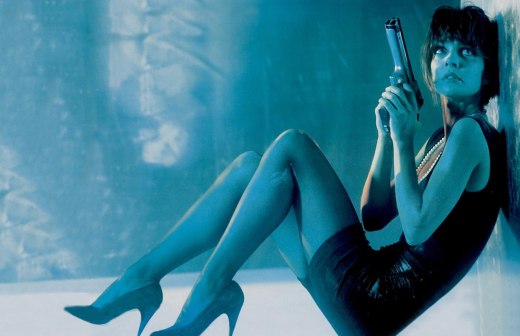
Femme-Nikita_2
Likewise, I have a friend who hated La Femme Nikita, because the title character murders a cop in cold blood at the beginning of the film, and he couldn't forgive her for that. Never mind that the story was about transformation and redemption - and about how society says it's okay to be a monster, as long as you're a monster on the right side of the law.  (Yeah, I loved it. But I get why he didn't. )
We all have sins we consider unforgivable.
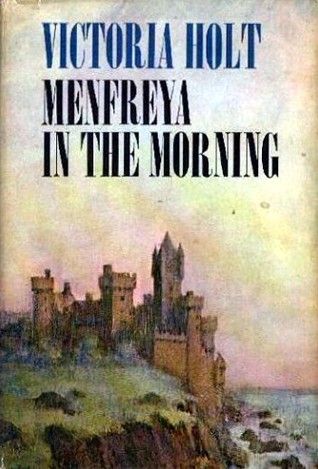
I just finished reading Menfreya in the Morning, by Victoria Holt. It was written in the 1960s - a Daphnie du Maurier-style Gothic romance, set in the early 20th century.
I was liking it a lot, the style is spot on: sweeping rocky coasts, a glorious old manor gone to seed, horseback riding accidents, political scandals, rumors of a ghost in the east wing - the whole Gothicky works. The main character, Harriet, is likable: a lonely, odd, smart girl with a despised limp, who ends up capturing the heart of Bevil, the man she's been in love with since she was 10 and he was 20. He's a gorgeous Lothario, and the most eligible bachelor in all of Cornwall. Even after they get married about half way through the book, she can't really believe that he wants her - he's had a lot of affairs in the past and still flirts with women more beautiful than Harriet.
Menfreya
The marriage happens early on, because the rest of the the story is tres Rebecca: what with the dark suspicions about her husband's infidelity, the ghost in the east wing, the sinister governess and all. So, although they have an ideal honeymoon, when they get back, those little dreads begin to take hold. One night they have a major disagreement over Harriet's best friend, who is also Bevil's sister. After the argument, Harriet is furious with him, and announces that she's going to sleep in the other bedchamber. He says no, he wants her there with him. She refuses.
Aaaaannnnnd he rapes her. It isn't spelled out as such, but it's pretty clear what happens... her arms and back are covered in bruises the next day, and she describes it as "the most soul-shattering experience of her life."
Okay, I thought. Do I put the book down now? But Holt doesn't pull her punches. She takes care to express the rage, humiliation and fear Harriet feels, and especially the loss of her autonomy, the realization that whatever she wants, he's stronger, he's her husband, and she has no way of fighting back.
Meanwhile, there's a kind young man lurking vaguely in the background, and I started wondering whether Harriet was going to ultimately end up with him. Would her husband die? Then I thought, wow. This is a totally different book than I thought it was going to be.
EXCEPT IT'S NOT. Harriet makes excuses for her husband, and eventually learns that she was wrong about the sister, and he was right, and all her suspicions about Bevil's infidelities were unfounded, and he really just loves only her and she loves only him and those two crazy kids work it out, by gum.
Fuck you, 1966.
What story was ruined for you by a character's actions?

-Q


Sunday, August 17, 2014

Dancing, Envy, and Character


Last night I danced to New Order’s Blue Monday at Transmission and it was a freaking blast!

Why does a 40+-year-old man get excited about dancing to New Order? Well, you have to understand, I grew up in Iowa. That doesn’t help? Okay, New Order was the kind of music that if you requested it at a high school dance A) you were lucky if the DJ knew you were talking about, B) luckier if the DJ had it, and C) and “OMG go buy a Powerball ticket right now” lucky if the DJ actually consented to play it, but then when the DJ did play it the dance floor would disintegrate into a bunch of morons staring stupidly at one another until Poison came back on.

High school was four years of wishing I was both somewhere else, and someone else. I wanted to live somewhere where I could go clubbing and dance to New Order, the Smiths, and Depeche Mode, like those characters you saw in the movies. I soooo envied them, because I was that person, despite being locked away in backwards small-town Iowa. I’m sure this was a factor – at least in part – as to why my nose was stuck in a book for most of the time I was growing up. Reading about the lives of those I envied, admired, or identified with was so much better than my own stifling sentence in purgatory.
All this has led me to wonder, what is it about character that hooks a reader? Specifically, myself. Certainly, it’s all those things I just mentioned, but those span a wide range of possibility, and why would I be drawn to those qualities more than others?

Last week Mark talked about the everyman – that guy/gal who was is just a regular old person with whom we could all at least partially identify with. That kind of character never would have kept my attention back when I was a kid. I was already too much the everyman, and I desperately wanted to be someone else. The characters I was attracted to had powers. I didn’t read comics – there was really nowhere to get them and at the rate I read we just didn’t have money for it – so it was books and movies for me, fantasies that had characters with magical powers, and the wilder the better. Man did I eat that stuff up. For me, those kind of stories had the trifecta. I envied their power, I admired their fortitude, and a completely identified with their need to affect change and right the wrongs in their world.

A few of my faves:


Elric of Melnibone – Michael Moorcock
Raistlin Majere – Weis & Hickman
Garion – David Eddings
Arthur, Merlin, & Excalibur
And of course a certain boy from Tatooine who needs no introduction:


Nowadays, the characters who tend to draw me in aren’t usually superheroes.


They are regular people who find themselves in extraordinary circumstances.


These are characters whose devotion, stubbornness, anger, and pathology enable them to exceed their limitations and become something more.


To name a few:

Deena Pilgrim – Bendis and Oeming

Hawkeye – Fraction and Aja

Boyd Crowder – Justified

Roland Deschain – Stephen King

Londo Molari – J. Michael Stazcynski

Starbuck / Kara Thrace – Battlestar Galactica


Who’d I miss?

Friday, January 17, 2014

What Resides in the Gap between the Thought and the Word?

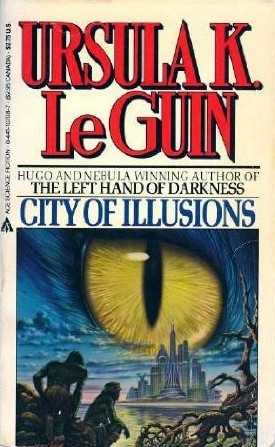
The most recent in my working my through Ursula K. Le Guin's Hainish novels was City of Illusions.

In the Hainish tales many Hilfs (highly intelligent life forms) bespeak: they have the ability to mind-speak and/or mind-hear. And integral to this way of communicating is the collapsing of thought/speech such that lying is not possible. Between the thought and the spoken or written word there is a gap. And in that space a lie can be placed. But to communicate with just the mind, there is no gap, and thus no lie.

The Shing, the enemy of the novel, rule the very sparse population on Earth, perhaps because they may have the ability to lie even when bespeaking. They have one law: Reverence For Life.  Le Guin writes in the introduction that every novel offers the author a chance to do what they could not without it. And the Shing allowed her "the chance to argue inconclusively with the slogan 'reverence for life,' which by leaving out too much lets the lie get in and eat the apple rotten."

These explorations on communication, lying, and gaps also connect up nicely with an observation Le Guin makes in the introduction about the difference between the novel as conceived in the mind, the novel that one is finally able to produce, and how the two never merge.

I'm guessing that every writer feels that gap between the novel as envisioned in thought and the novel that gets written as those mind-scenes travel through the fingers (or through the vocal chords if you use a speech recognition program to write). But I hope we don't always feel that in that gap there resides a lie.

I hope our bodies also have a great deal of wisdom that they offer us as our thoughts move through us on their way to becoming physically present in the world.

I hope there is some electric something that allows the author's words to bridge the gap between their own mind and the minds of their readers, a sparking, sparkling arc connecting us.

I hope there is magic in the gaps. In the gaps between thoughts and words. Between people. Between worlds.


Saturday, December 7, 2013

Ancillary Justice


My office, left-center

With the advent of my newly indentured servitude in the dusty and shadowed corridors at the Great Institute of Secret Learning and Ancient Knowledge, I've had plenty of time to catch up on my reading while crammed into the moldy dark of the commuter cattle cars with the rest of the plebeian laborers.

And so, I recently finished Ancillary Justice.

It's the first book by Author Ann Leckie. You might have heard something about it not too long ago. It was making quite a splash in the genre-fiction world, gaining the type of pre-release hype a debut author only dreams about. This is how I heard of it and ended up picking it up.

But for our desert island readers, here is what the back cover synopsis had to say:

"On a remote, icy planet, the soldier known as Breq is drawing closer to completing her quest.

Breq is both more than she seems and less than she was. Years ago, she was the Justice of Toren--a colossal starship with an artificial intelligence linking thousands of corpse soldiers in the service of the Radch, the empire that conquered the galaxy.

An act of treachery has ripped it all away, leaving her with only one fragile human body. And only one purpose--to revenge herself on Anaander Mianaai, many-bodied, near-immortal Lord of the Radch."

Weird, huh? Kind of interesting though, right?

I certainly thought so.

So, maybe somewhat unsurprisingly, the synopsis has the long and short of it. The story is about Breq. Breq is a dead person filled with the last remnant of an AI which was once housed in a massive starship and the hundreds of corpses that made up its crew. Its only living crew members had been its officers. During this time, Breq was known as The Justice of Toren, part of a grand fleet on a continuing mission of annexing planets one by one for the galaxy-spanning empire that built her, all in the service of their nearly omni-present and conquering Emperor Anaander Mianaai. But then something happened--something bad, something blood-soaked--and now Breq is all that is left and she is consumed with a thirst for revenge on the Emperor she once bowed to.

So despite the initial odd edges and ideas, the book is actually a pretty basic set-up when you get right down to it, but also perhaps unsurprisingly, it's those odd edges that really make it stand apart. They are well-written and smart--if maybe somewhat light on the more exciting "action" descriptions, but that's really only a minor complaint. Ancillary Justice is a fun read, stuffed with ideas and coolness, but it moves at a quick pace.

The really interesting part about this book is that it's all written in the First Person. Okay, sure, that's not all that revolutionary at all, actually, except in this case the POV is from that of an AI that used to be a giant starship, and for a large part of the book, also inhabits multiple bodies simultaneously. It's a testament to Leckie's sure hand that the POV jump between the ship and it's many bodies (or Ancillaries... see what she did there with the title? Eh? Eh?) is not only smooth and easy to follow, but feels natural.

Another interesting aspect--very interesting actually--is that, as a result of being a spaceship in a human body, gender is a confusing idea to Breq, and not always readily apparent to her whenever she has to deal with other humans. It's a bit of an issue for her and she often worries if she's guessing right. And what's really great about that is that the default pronoun she uses in the story ends up being "she". Thus, gender is not only a bit opaque for Breq, but for the reader too. And, much like the multiple POV shifts between the same character in its multiple bodies, it feels very natural. In fact, it didn't take long before I didn't notice the lack of "hes" in the book at all. Really, despite Breq's confusion, the gender of the other characters is not only often easily distinguishable, but it quickly becomes apparent that it doesn't really matter.

It's all very well done. Very impressive.

In the end, I really enjoyed the book. The answer to what's going on and what happened to Breq and why she wants her revenge is interesting and fun. Some folks out there might complain that the book turns out to mostly be a prequel for a greater story yet to be told, but I didn't mind that at all. If that tale is ever shared, I will definitely show up for it. All in all, Ancillary Justice is worth the hype and worth the read.

Very recommended.


Buy it, read it,
Jon

Friday, September 20, 2013

Summer Reading or How Books can Save your Life

One of the reasons I love summer is because I have more time for reading. This past summer I noticed a theme running through a number of the stories and novels I was reading: Books and/or writing as life savers. I'll mention three of the bunch here.

Among Others by Jo Walton.

Dan Savage began a YouTube project to help LGBTQIA kids who were being harassed in school. He asked queer adults to talk about how great their lives are now: it will get better, they will find community and through that community love and acceptance. I describe Jo Walton's novel as an "It Gets Better" project for any kid who feels marginalized. Morwenna Phelps finds herself in a boarding school after some very bad stuff happens in her home life. She finds enough solace in Science Fiction to stay sane, but she comes into her own when she finds a Sci-Fi book group in the local town. Books can save you and finding other people who love books can make your life worth living.

Because Mori figures out her life through reflecting on the books she has read or is reading, for me, this novel also served as a primer for the canon of English language Sci-Fi pre-1979. (While most of the books Mori reflects on are science fiction, her own world is infused with fantasy elements--fairies!)

Plus it has an amazing ending in which The Lord of the Rings becomes both weapon and shield.


A Stranger in Olondria by Sofia Samatar.

Jevick was raised on an island with no written language to speak of. His father, a wealthy pepper farmer, decides that it will add to his prestige to teach his son to read and write, and so hires a tutor from Olondria, where reading is commonplace, where books abound. Jevick falls in love with books and eventually makes his way to Olondria. There he is driven to near-insanity by the ghost of young girl from his archipelago. He learns finally that he can approach her not in fear, but in love, when he honors her request to write down her life.  Jevick must save himself and calm his ghost and the only way he can do that is through writing.

For me, the most powerful metaphor in the novel is that books can stand in for our jut, in Jevick's language meaning something like spirit/soul/self. What we put into books gives us, creates, the very best of who we are.


The Drowning Girl by Caitlin R. Kiernan

For the most part India Morgan Phelps controls her schizophrenia with therapy and meds. Until she encounters a naked woman by the side of the road and brings her home. This woman might be a siren or she a wolf. Imp can't figure out what is real and what is not real until she writes a story for each.


All of these books blur the line between magic and insanity. As a reader you're never quite sure: are the main characters crazy? or is the world magic? Or are we crazy and the world is magic? We're crazy because the world is magic? In each, the main character carves out a way to live with insanity/in the crazy world through books and/or writing. Notice even the similarity in the main characters' names in Among Others and The Drowning Girl.

I read these three close on the heels of one other and their similar themes really got to me. I kept feeling like maybe the authors were all part a writing group and decided to write on the same prompt.
Reading them also brought home the idea that we focus on what we love, what is closest to us. When someone in the radio business dies, NPR dedicates disproportional airtime to their remembrance. And wouldn't you say that, pretty much, authors are authors because we love books, we love writing. Because we love books, they show up in our writing. I'm sure there must be novels in which the characters dislike reading, but much more often I see reflections about reading, writing, and books showing up in books.

Books are the love poems we write to the books we have fallen in love with.

Sunday, May 5, 2013

Something to Read?


Hey ho, Scribblerati Faithful!

I am pumped! Why? Because spring is here!

Maybe.

I just don’t know. And you know what I mean, right? The weather has just been atrocious. God awful. Horrific.

Now, I have allergies, so I kind of have to live somewhere where everything is dead for several months at a time, and over the years I’ve gotten pretty good about rationalizing the cold, but I’m done. DUN!

So let’s talk about spring, and summer, and sitting on your deck with a cold, sweaty beer, or a sparkling glass of your favorite rosé, AND READING.

Here’s a few ideas for ya.

Gone Girl
Gillian Flynn

Folks, this book is WAY outside my comfort zone. I'm mostly a hard-core sci-fi/fantasy guy, but I read this at the behest of my editor. At first I was like, nuh-uh, but then I decided, why not stretch my wings a little? And besides, it’s hard to read sci-fi/fantasy while you’re writing it.

So I read it, and… this book is the bomb.

For those who don’t know, Gone Girl is about a man and a woman who fall in and out of love. Simple story, right? Not in this case. These people are crazy. CRAAAAZY! It’s an, “I think you need to be on medication,” kind of crazy. Seriously. What they do to one another is just terrible.

But it’s the way the story is told that makes it so great. I don’t want to give anything away, so I won’t say much more than you will love and hate each character in equal measures. You will laugh. You’ll be horrified. And at the end of it all, if you’re like me, you’ll sit there and go, “Huh. That was frakked up.”

And then you’ll try to decide when you’re going to get around to reading it again.

Billy Lynn’s Long Halftime Walk
Ben Fountain

This is another Editor Recommendation.

ALWAYS read those when you get them.

Here’s the story. Billy and his squad are war heroes and they are back from Iraq for two weeks. The book is told entirely within those two weeks, more or less, and you are in Billy’s had the entire time.

The thing that was so fascinating for me about this book is that you are in Billy’s head for the entire time. I know I already said that, but it’s totally worth repeating. You really are in his head. Like, ALL THE TIME. Every minute. Every thought. Everything from the minutia to the profound. Sometimes your heart breaks. Sometimes you laugh so hard that those nearby at the bar turn and look (true story).

There’s this one part, where he and his squad are at the Dallas Cowboys Stadium and they are meeting the Dallas cowboy cheerleaders, where Billy goes on for most of a page about their breasts. It’s so nineteen-year-old guy real, and so crazy hilarious. It brought tears to my eyes.

But trust me, there’s more here than just hormones and boobs. The story has heart, and you will love it.

Hawkeye
Matt Fraction and David Aja

Okay, lest you were worried that I’ve completely lost my geek cred, we’re switching to comics.

I read a bunch of these. Too many, probably. But we likes them, and this is one of my favorites.

I honestly didn’t think I would like this comic because the author, Matt Fraction, isn’t my favorite. But Fraction has nailed Hawkeye, and the artist, David Aja, is exceptionally talented. I don’t know which of them does the paneling/layout, but it’s top-notch. No herky-jerky pacing here, everything is well thought out, making you laugh in one panel and cringe in another.

Of course, every good story is about character, and in this comic Fraction has nailed Hawkeye’s character. Sure, there’s the requisite beat them up / bad guy story arcs, but the heart of this comic is Hawkeye himself. He’s a lovable, good-natured screwup whose mistakes are mostly balanced by his good intentions.

And then there’s the women. They love him, and he can’t stop loving them back, regardless of who it is, or which relationship he’s currently in. Hilarity ensues.

It’s loads of fun. Buy it, take it to the park, and be proud. “Yes, we read comics, and we likes them!”

Friday, March 22, 2013

On Being Thrown Out of the Story - Part II

A couple posts back, Claudia got me thinking about the idea of interrupted reading, of writing that throws the reader out of the story, of good writing that does this.

Not knowing the words the author uses is one kind of being chucked out.
Another is the beauty of the words, which I discussed in my most recent post.

In today's post, I'm ruminating on having to stop reading in order to think more fully about the ideas developed in a work. And for this exploration, like the last, I'm using Ursula K. Le Guin's The Dispossessed:


"[Shevek] recognized that need, in Odonian terms, as his "cellular function," the analogic term for the individual's individuality, the work he can do best, therefore his best contribution to his society. A healthy society would let him exercise that optimum function freely, in the coordination of all such functions finding its adaptability and strength. ... That the Odonian society on Anarres had fallen short of the ideal did not, in his eyes, lessen his responsibility to it; just the contrary. With the myth of the State out of the way, the real mutuality and reciprocity of society and individual became clear. Sacrifice might be demanded of the individual but never compromise; for though only the society could give security and stability, only the individual, the person, had the power of moral choice--the power of change, the essential function of life. The Odonian society was conceived as a permanent revolution, and revolution begins in the thinking mind."

Sacrifice vs. compromise; individual, state, society; work and function; security vs. morality; change and revolution. And Le Guin goes on for two more pages. Page after page of idea after idea, incorporating the concepts of time, loyalty, work, humanity, pain and suffering, joy vs. pleasure.

Within the whole of the novel, there are a couple of spots where Shevek engages in this sort of deep, internal reflection. The rest of the novel helps to support these sections by having the characters embody the ideas in their personalities, dialogue, and action.


Reading these sections, I was torn by wanting to go on, but also wanting to stop. To savor. To think about how these ideas fit into my own life. Were they true? Were they helpful?

Not only did I want to slow down to savor the ideas themselves, I also wanted to stop and marvel at how Le Guin wrote the novel so that I could understand those three pages more fully. "Cripes! Everything's she's written up until now has been aiming right here!" Flip, flip, flip. "See?" Flip, flip. "And here? See!" Flip "And here!"

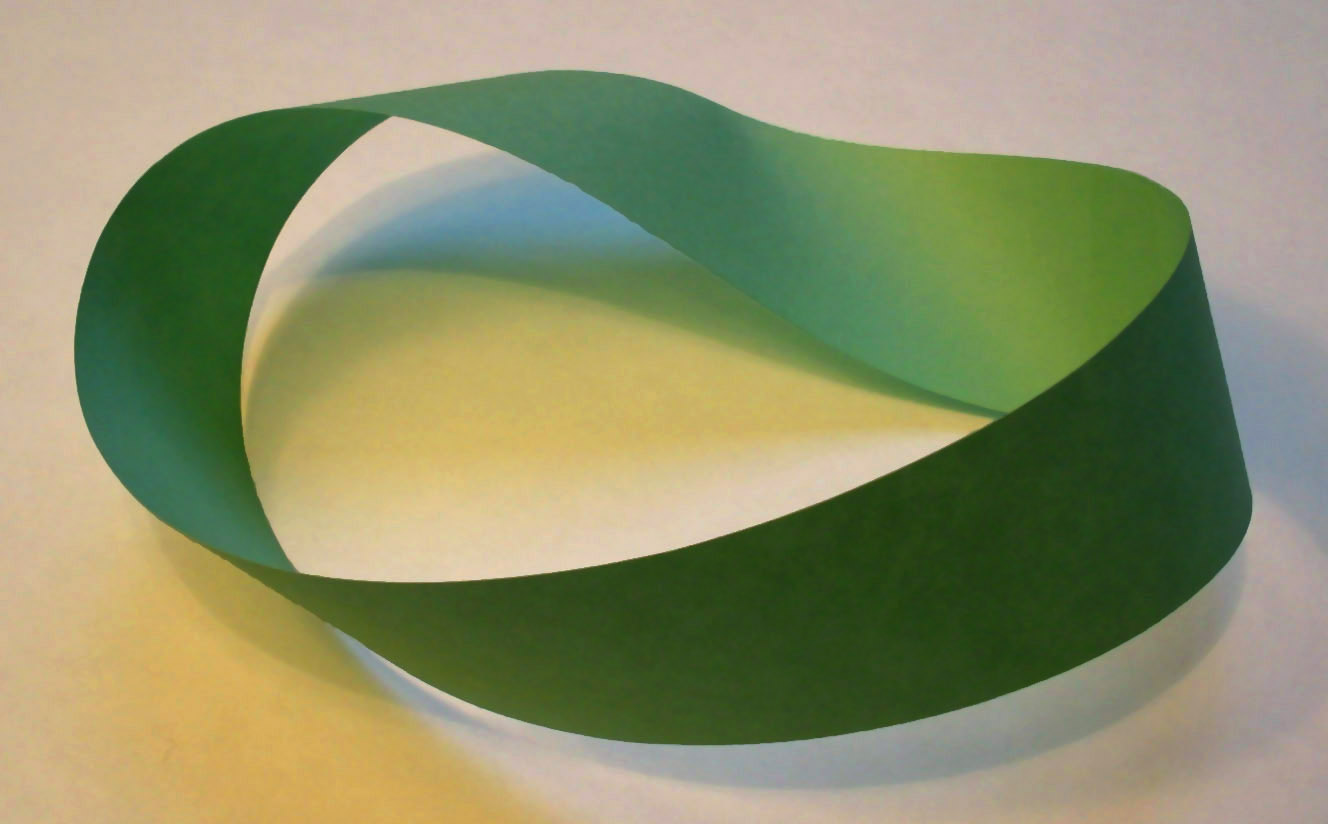
I like to believe that Le Guin would not have taken it as a compliment if someone reviewing the novel had said it was so engrossing that it never shook them out of the story. For me, the very reason the reading was so engrossing was because it invites reflection. Reflection on the reader's own ideas and commitments. It's like inhabiting a three-dimensional mobius: being pulled out of your life and into the story while in the next moment, the story inviting you to pull it into your own life. A two-way engrossing, wrapping and warping. Being pulled in and enclosed by the novel's left hand, while being released and gently nudged back by the right.
By David Benbennick


Tuesday, September 18, 2012

Some recommendations

Being in the Scribblerati carries with it certain responsibilities.

A lot of people often come up to us (and by "a lot", I mean: None. And by "often", I mean: Never) and they say: "You Scribblerati... you're pretty awesome. Pray tell, what kind of things do you like, because I would very much like to like them too. I would love to stroll about town and lord my new found tastes over the heads of others' much more inferior tastes while laughing, taunting them until my throat is sore, saying: 'ha ha, jerks, you're not cool like me and the Scribblerati!' Simply put, that would be... heaven."

Your cries have not gone unheard...

Some Recommendations
by Jon

Books
Reading... gross.

1. Cloud Atlas


By David Mitchell, in its own words:

"A reluctant voyager crossing the Pacific in 1850; a disinherited composer blagging a precarious livelihood in between-the-wars Belgium; a high-minded journalist in Governor Reagan’s California; a vanity publisher fleeing his gangland creditors; a genetically modified “dinery server” on death-row; and Zachry, a young Pacific Islander witnessing the nightfall of science and civilisation — the narrators of Cloud Atlas hear each other’s echoes down the corridor of history, and their destinies are changed in ways great and small."

Fantastic and soon to be a major motion picture. I intend to both read and watch the hell out of it. See the trailer here.

2. Red Country


By Joe Abercrombie. It's not out yet; that fact drives me nuts. However, it will be out around my birthday... ahem... Anyway, this will be his sixth book of an intended nine, all of them set in the same world, and the third and final one in the middle "loose" trilogy. In its own words:

"They burned her home. They stole her brother and sister. But vengeance is following. Shy South hoped to bury her bloody past and ride away smiling, but she’ll have to sharpen up some bad old ways to get her family back, and she’s not a woman to flinch from what needs doing.  She sets off in pursuit with only a pair of oxen and her cowardly old step father Lamb for company.  But it turns out Lamb’s buried a bloody past of his own.  And out in the lawless Far Country, the past never stays buried. Their journey will take them across the barren plains to a frontier town gripped by gold fever, through feud, duel and massacre, high into the unmapped mountains to a reckoning with the Ghosts.  Even worse it will force them into alliance with Nicomo Cosca, infamous soldier of fortune, and his feckless lawyer, Temple, two men no one should ever have to trust…"

Can't wait.

Movies
Ah... le cinema...

It has come to my attention that not very many of you have seen this film. What is wrong with you? Seriously. For real. Seriously, what's wrong with you? The film is directed by Joss Whedon. It stars Thor. It's so meta, you'll shit. Seriously. One of the best films of the year. A geek must.


Okay, with this one I will just go ahead and assume that many of you haven't seen this film either. Don't feel bad, Joseph Kahn also directed Torque (barf). As a result, there are only 12 people on the planet, including the cast and crew, who have heard of this film, let alone actually taken the time to watch it. I am one of the lucky few. Part teen comedy, part slasher flick, part scathing indictment of society, part time traveling adventure, part sci-fi horror, part 90s nostalgia trip, part sarcastic laugh riot, part Space Bear snuff film, part domestic terrorism thriller, part meta-comedy (you will also shit), this film is absolutely worth your time, although you won't think so at first. At the very least, wait for the moment when the kid remembers different eras throughout 19 years of detention. And yes, I'm recommending it, even though Dane Cook is in it.


Comics
Sequential art, cavemen loved and respected it, why can't you?

Rob Liefeld created this character. Are you familiar with his work? No, read this, we'll wait. Ah, you're back. Please join the others in looking at me and my recommendation somewhat dubiously... Go ahead, because I'm serious. This is a good comic. Really good. But, but... you say. How? How can a comic book featuring a character by one of the worst in the industry from a time when comic books seemed to be competing to be the worst of the indutsry (the 90s), actually be good? Well, for starters, Liefeld isn't involved. As a result we get an intergalactic, far-flung-future tale of clone soldiers on insane alien planets. They live for the mission. They die for the mission. It all reminds me of an arty Doctor Who or Star Trek, but crazier and a shit ton more violent. I don't do it justice. Trust me. Classic Sci-fi. Great art. Fantastic designs.


Joe Hill is the son of Stephen King. He is a writer. Not since Dick Grayson has a man been more doomed to exist in his father's shadow than poor old Joe. The good news is: He's pretty all right. In fact, he's actually pretty good, as evidenced by this fantastic tale of the Locke family and their lives in the aftermath of trajedy while living in the family's ancestral home: The Key House. It is weird and rambling old structure set at the tip of a strange little island at the far flung edge of Maine, a place well known for odd. Oh, and also, the house is full of locked doors and keys, find the right key and the right door and odd things happen. Become a ghost. Beome an old man. Become a giant. Mend things. Alter time. Bring shadows to life. Switch genders. Steal memories. Go anywhere. But what does the Black Door Key do? And who is the ghost woman trapped at the bottom of the well...


TV
This and beer keeps us from going crazy.

1. Louie
There are few hard luck cases like Louie. He is the hang-dog man, sad-faced and trod upon. And hilarious. And brilliant. Riotously funny. Suddenly serious. Shockingly insightful. Often kind of gross and pathetic. But still great. It's a show that is constanly in flux and always innovative. The episode where he and Robin Williams go to a funeral? Genius. This is a man's life, so sad, so entertaining...


2. Archer
There are few things as awesome as Sterling Archer.


Told'ja.

Danger zone,
Jon

Friday, August 3, 2012

Done by summer's end...?

I started my second attempt at a novel back in January.


Well, that's not totally true. I wrote the first chapter of what would become my second attempt at novel a year or so ago.

Wait... no.

Farther back, I guess I first tried to make it a short story, maybe two years ago, but it was too big and clunky and just wouldn't fit. It burst at the short story's seams. It wouldn't fit and yet still say all the things I wanted it to say.

Which was, to say the least, a bit frustrating and problematic... at least, at first.

So I took the short story and I churned out a first chapter, just to try it out and see if it could walk around a bit. I tested it out, first among the venerable bastards of the Scribblerati and then in David Oppegaard's nascent Loft class.

It seemed to do all right. It could walk. In fact, it did better than all right. It didn't just walk, it ran. I'm pretty sure I've talked about this project on here before. At the very least I talked about what the book was generally concerned with, right?


Right.

So anyway, in January--new year, starting out fresh and all that--I sat down and started working on it in earnest. Tentatively working-titled as Monsters, I wanted to finish it by summer's end. It wasn't easy. Well, ok, sometimes it was easy. Sometimes the prose flowed like a mighty river. Sometimes the hum of the screen was so loud while I was staring at a blank page, it just about drove me insane. But now, 13 chapters in and on the other side of a short but wicked bout of writer's block, now 68,000 odd words along, I figure there's only four chapters and just under a month left.


For those of you keeping score, that's a chapter a week.

I think I can do it. I do. I think I can do it and here's why. Stepping into the project, I only had one goal: Done by summer's end. But I should clarify, I mean first draft done. It doesn't have to be pretty. It doesn't have to be good. It doesn't even have to be all that coherent. It just has to be done.

First draft done.

By summer's end.

One chapter a week.

Yeesch. I'm pretty sure I can do it.

Hopefully...

But here's the other trick... You ready for this? It doesn't matter if I get done by summer's end. See that? It doesn't matter. It's just an arbitrary goal. It's one I think I'll pull off, or at least, near enough to make no difference, but in the end, whether I make it or not...

No big whoop. The only thing that matters is finishing.

First draft done.


Hooray!

Then, my plan is to set the humped and wretched beast aside for a few weeks, probably the whole of September, and then take it and the responses I have already received from the Scribblerati, sit down, and get started on the second draft.

Which is the reason I'm doing this blog here today. The second draft. This is where I will fix it. This is where I will smooth things out, make them a little more clear, make them fit better, make them better serve the story. This is where I will determine the story, to be honest. I'm sure I will lose characters, I'm sure I will combine some as well. I'll move some to the forefront and some to the background. I will cut scenes and I will add others. The first draft just provides the frame work, the shape, the big block of stone. The second draft is all about the shaping, the chiseling off of the unnecessary bits, of turning that big block of stone into a beautiful statue... or at least, a statue.

And here's the little guiding light. Here is something to see by in that word-crammed darkness, a map to guide my way, to guide your way in your own work. It is filled with things to think about and things to remember. Print it out. Tack it to you wall. Learn it, love it, live it.

It's Pixar's 22 rules of storytelling.


That's a bunch of basic true-isms there, kids. Think what you will of Pixar (although as a hint... The correct way to think of them is that they're awesome. Don't think so? You're wrong.), regardless of how you may feel about them and their films, as a writer, it's important to know that this list is right. It's a good tool. Sure, y'know, maybe don't worry about it so much at first, but later... like I said, in the second draft? Keep it close, because the path through the second draft can be darker and meaner and more discouraging than the last time, so it's good to have a map.


Keep writing,
Good luck,
Jon

Friday, June 29, 2012

Page 99 or What can one page tell you?


While at Uncle Hugo’s last weekend with Jon Hansen, he told me about the book he was reading, “The Forever War.”

“How is it?” I asked.
He handed a copy to me off the shelf. Duh. We were standing right in front of it. I did what I do with any book I’m considering. I opened and started reading. In this case, it was page 1, and this was the line:

"Today we're going to show you eight silent ways to kill a man."

That’s a damn good line, I thought. I’d buy that book. (Fortunately Jon has agreed to lend me his copy when he’s done.)

So apparently, when book shopping, I don’t really give most books a big chance. I don’t want to read a hundred pages to decide if it’s a good book or not (I know many people who do). But—if the line or paragraph gets my attention, if the writing is so good I want to turn the page and see what happens next—I might purchase the book. If not, the book goes back on the shelf. 

This made me wonder about my writing—and I’ll ask you writer-types the same questions. So what happens when you pick up your work and open to any page and read any line or paragraph? Do you like what you find and want to keep reading? Will your readers?

For me and my own work, it depends on the page. I sometimes am surprised and think, “Gee, that’s good. Where did that even come from?” Other times I want to put my own work back on the shelf (but I can’t. It means back to the writing desk).

And then of course, there is always this site: http://page99test.com

It’s based around this saying:
“Open the book to page ninety-nine, and the quality of the whole will be revealed to you.”
~Ford Madox Ford

It’s an interesting idea. Check it out. If you create an account, you can read other people’s page 99 from their books (mostly unpublished)—or upload your own page 99 and get feedback. I’ve gone to it a few times, to check out what other writer’s have posted there. After reading each sample you can give feedback, most importantly, about whether or not you’d buy the book, or turn to the next page. I might be a tough grader, but for most of the samples I read on my last visit to page99test.com I wouldn’t turn to the next page or buy the book in 9 times out of 10. Why?

In some cases it was “thick text” (one unrelenting descriptive paragraph filling the entire page), unrealistic or forced dialogue, telling vs. showing, unlikeable characters, characters who are doing nothing, great descriptions with no true character motivation, and so on. Or in other words, not great writing.

It’s not easy being a writer, but it’s also not easy being a reader. We’re all busy people, and if I (the reader) am going to take the time to read your stuff, you’d better be good, and you’d better be entertaining, and your writing has to be alive on the page, every single page. It’s got to be poetic, or funny, or scary, or (pick your favorite emotion), or contain likeable characters and an actual story. Or we’re not turning the page, and we’re not buying your book. And as the author, I think that stinks. But I also know that’s the name of the game. Why do you think I spend all this time editing and revising?

For fun I decided to post page 99 of my unpublished book BLACKHEART here:

Please feel free to check it out. Leave feedback if you’d like. Check out other authors on the site, or even post your own page 99 if you are searching for feedback. Again, you’ll need an account to do this. There are ground rules for the page99test.com site, so read them carefully if you do set up your own account.

I debated about also putting up page 99 of my new book-in-progress, SUNLIGHT. But, it’s too new, still a first draft. I haven’t even entirely settled on which page will actually be page 99. But, I did look over that page in my rough manuscript, and it made me realize this: to make this page in my book work, to make it really stand out, sing, carry the story, I’ve got more work to do. 

Back to writing.

Happy 4th of July!

Mark
@manowords

Sunday, April 22, 2012

The Dog Days of the First Draft

They say the most important part of writing is to finish something.


That's it.

Edits? Critiques? Rewrites? Yes, that is all very important too, most definitely, but without actually finishing something, then what's the point, right? In the early stages, you have to keep that forward momentum going. You have to ignore the glaring faults. You have to ignore the inconsistencies. You have to ignore all those nagging doubts nipping at your heels like a pack of wolves looking to bring you down.

You have to finish. At least, that's what they say...

But it's not always that easy, you know?


No. In fact, it's really hard. Most people won't do it. Most people can't do it, because it's hard. It's hard to keep going when you know there are problems and there's no end in sight and it all feels just... terrible. 

Plot problems. Pacing problems. Inconsistent details. Unecessary characters. Things to add. Things to subtract. Unclear direction. Not enough description. Too much description. Questions of value and worth. Concerns about marketability. You should never write toward the market, but that doesn't mean you should be wasting your time on a dud project, right? And how do you know if it's a dud project or not? Questions, comments and concerns. It pokes at you. It slows you down and it can stop you cold. It threatens to take you out at the knees.

That's where I am right now, the middle of nowhere with a long way to go.


I'm working on my second book, so I've kind of touched on these ideas before. 

I've talked about starting over. I've talked about motivation. I am a little over halfway through the first draft now (at least, that's what my general plotting tells me), which means I am smack dab in the doldrums, slogging through a narrative quagmire as I try to bridge one part to the next, plagued with motivation and world detail questions, blah, blah, blah... right? It's maddening, but you have to ignore it and keep on keeping on, because as soon as you start editing and re-editing, and then editing some more, as soon as you start spinning your wheels, staring at that blank page and worrying about what comes next, as soon as you start fretting over value...

You're sunk.

You have to finish. I mean, really, what other choice do you have? Quit writing? No, you have to remember that it's supposed to be like this. After all, what's the common addendum to the Finish Something Rule:


But that's the sticking point, right?

I may know that I can come back, that I can fix it all later, but sometimes it is hard to keep that in mind. At times I feel like that room in my head filled with all the junk and scrap and bits and pieces that I drag out and hammer into the shape of my stories is pitch black and I am just stumbling around in there hoping to find my way. And sometimes it feels like that's not going to happen, that I'm just stumbling around in the dark. Lost. That's scary. It threatens the whole project.

I know my first book was a struggle. I know that. Thinking back on it now, it seems like it just kind of happened. One day: Poof! Book. Like I just wrote a few chapters, I planned ahead a bit, maybe changed my mind here and there, wrote a bit more when some stuff occurred to me and then it was done. Boom.


First draft finished, easy-breezy, lemon-squeezey!

That's a lie, of course, a recollection colored by fear and doubt and probably the failings of an aging mind, but still... When you're in the middle of it all, and that second draft is so far away, it's hard to remember that the first draft is an important tool. That it's just a frame work, a map to something better. It's hard to remember that the First Draft is just that, a First Draft, one of many and that it's not done.


And honestly, barreling ahead? That can often be the fun part. What happens next? It could be anything. It could be inspiring. It could be new and brilliant and twisty and awesome. It could change everything. What happens next? It could be amazing, yeah, but that fear and doubt reminds you that it could also be terrible.


But that's the rub, right? What happens next? To find out, you have to keep going. You have to finish, even if it might get ugly.

Keep writing,
Jon

Friday, January 6, 2012

But Think of the Children!


I recently read a blog which featured artist Dave Devries’ The Monster Engine project, wherein he takes children’s original drawings of monsters, and paints them realistically. I think it’s really cool; the results are both surreal and somehow primal – and I think Devries taps into something basic about the way children think, and view the world, and translates it so we adults are transported back to a time when we were scared of what might be – what most likely was - under our beds.


According to the comment section, however, it seems there are a few parents who don’t feel the same way. These folks said that the project was cruel, dishonored the child’s vision, and two women stated that their children would be ‘devastated’ if someone ‘did that’ to their art. They accused him of twisting a sweet child’s sweet vision into something nightmarish.

Um.

Okay then, many other commentators commented – but… Devries is collaborating with the children. He isn’t asking them to draw a precious fwuffy bunny, and then turning it into a blood-soaked serial killer. He’s asking them to draw a monster.

No, no, the mommy brigade insisted. Twisted. Appalling. Heartbreaking for a child. The argument became so heated that the blog moderator eventually deleted some of the nastier digs, and shut down the comments section.


The whole thing got me thinking about children's and young adult literature, and what exactly is appropriate for children. And also, who is the best to judge?

First of all, I know that every child is different. One 8-year-old could be blithely watching Tales From the Darkside alone with the lights off, and the next could be unable to sit on the couch for a week after watching that one Muppet Show episode where the furniture starts eating people. (Yes, those are examples from the 70s and 80s, and yes, I was the latter kid.) Also, I know that a parent should be the person to choose what is appropriate for their child to read. No question. It’s their job. But I’d argue that authors, parents and, most importantly, children themselves all have different criteria about ‘what is appropriate.’


Of course, the question of appropriateness is not limited only to how scary a thing is. There’s sexual content, violence, adult themes, religious philosophies, even language and humor. The big question on all fronts is, “Is the child ready?”

I am not a parent. Barring some bizarre and/or tragic happenstance (knock on wood), I will never be a parent. One of the first times in my life I was awed by the protective instincts of a parent was at my friend Dan’s house. He was having a party in the back yard, grilling out. There was a gaggle of children tearing about the place. I was sitting on the deck, in a lawn chair, the hot charcoal grill a mere 6 feet or so in front of me. I was watching as a little girl, at that age where she had just started to walk, suddenly started careening, hands out, toward the grill. Dan, who was not the father of the girl, but who is a parent, was in a conversation all the way on the other side of the lawn, not directly facing the girl and her imminent charring. I don’t know how he did it, but Dan was over there, the girl’s wrists clasped firmly in his hands, stopping her short, before I had even managed to completely rise from my chair. Don’t be too horrified; I would have reached her in time. It’s just that Dan, distracted, and way farther away, nevertheless got there first. He had the advantage of finely-honed daddy instincts.

The protective instinct is so innate; it’s really a wonder to behold sometimes. Sometimes, however, it gets in the way of reality. Or, more specifically, manners.

My friend Shannon was on a plane, sitting in the window seat, and like any good Midwesterner, she didn’t want to disturb her neighbors, so she waited until she really had to pee before she climbed over them to go to the bathroom. When she got to the back of the plane, dancing from foot to foot, there was a line. As she was waiting, a mother and her approximately 7-year-old child got in line behind her. The door opened; it was Shannon’s turn, but the little girl walked in front of her and started to go into the bathroom. Shannon said, “I’m sorry, honey, I think it’s my turn.” The mother, in a loud, indignant tone of voice exclaimed, “She’s just a CHILD!” Shannon, not to be daunted, crouched down in front of the little girl and asked, “Sweetie? Do you need to go really bad?” “No,” said the girl, shrugging. “Then do you mind if I go first?” “No,” said the little girl, smiling. Shannon walked into the bathroom. The mother huffed and glared.

Okay, so. No parent I know would ever behave in such a way. The woman was rude. But it’s a good, albeit extreme example of that protective instinct gone bad. It’s a miracle that the little girl, despite her mannerless mom, didn’t behave like an entitled asshole – or at least a coddled little baby chick. In truth, she had more on the ball than even her mother cared to notice. Which I think is true for many young readers, as well.
I’ve heard the “She’s just a CHILD” argument applied to children’s lit, too. How dare they market this to children, how dare they put this in that section of the store, how dare they carry this at a school! When it comes to what parents want their own children to read: fine. When it comes to institutionalized ‘protection’ of children to exposure to ‘harmful’ works (I’ll stop air quoting now), that’s when we authors, avid readers, aunts, uncles, and erstwhile children get uppity – along with every savvy parent out there.

I sometimes wonder if people who never have children somehow remember more accurately what it was like to be one. No, we’re not necessarily exposed to kids every day, but then again, our memories of childhood are not filtered through the parental lens. My friend Rhoda, for instance, a mother, had to stop reading Philip Pullman’s children’s lit book, The Golden Compass, because it featured the kidnapping and torture of children. I knew Rhoda as a child, and I can guarantee she would have loved the book then. Likewise, she would have devoured it greedily at any point as an adult, before she had become a parent.


Childhood reading experiences are fundamental in the development of language, humor, imagination and knowledge of the world. I may have been terrified of Muppet ottomans (ottomen?) as a child, but I could take most anything in book form. I read the Lord of the Rings trilogy at 11, and the Thomas Covenant books when I was 13. War, rape, torture, sex, death, cruelty… I distinctly remember my wide-eyed fascination, reading ‘beyond my level,’ stretching my understanding… what I don’t remember is being traumatized. I read books at a time when I only had one digit in my age, books about terrorists, murderers, kidnapping, obsessive love and abuse. Sure, I also read about magic and friendship, kindness, beauty and true love. But I think I understood the good things all the better for the bad. Protecting children from books containing big ideas and big evil seems backwards… after all, what gentler way to introduce a person to the big bad world then through fiction?

Friday, September 23, 2011

Two years later...

Who would have believed it to be possible, but two years ago, almost to the day, the Scribblerati put up their first post.

We had been around for a while before that, working, meeting, critiquing. We'd had some members come and go, but that first blog post really solidified us as a group. It cemented us as the core, as a team, and it put us out there in the world for the first time. It signified our intent.

From the original text:

The Scribblerati are:

Claudia Hankin Balluff
Was once voted 42nd "Sassiest Girl in America" by Sassy magazine. That's not top banana in the sassy department, but it's still pretty darn sassy.

Lisa Bergin
Philosophy professor; felted creature maker; food grower and preserver; mama who's at her calmest when she can carve out time to write her middle-grade novel.

Jon Hansen
Jon Hansen never wanted anything more than the simple, care-free life of a hammock-tester. Fate, it seems, has plans of its own...

Shawn Enderlin
Is a sci-fi / fantasy geek, foodie, alt music fanatic, comic loving, corporate IT slave who writes and travels with the lovely @mplstravelkitty.

Mark Teats
Author of BLACKHEART, specializes in angels, demons, dark dreams & fast-paced supernatural writing. Per Mayan prophecy his best seller will hit the shelves Fall 2012.

Two years later and we're still here.

We're still working. We're still unpublished, but we're still meeting, we're still critquing, still chugging along and going strong. But where are we? What are we up to? Now two years later, where do the storied Agents of the Scribblerati find themselves? Well... obviously Lisa still doesn't have a personal information page to link to... some things never change... and we recently attended our very first convention (Diversicon) with some all-bound-up-and-pretty samples of our work to hand out for a bit of swag, but other than that, let's see, shall we?

The Scribblerati

Claudia Hankin

Claudia currently splits her time between editing and rewriting the second draft of her novel, Ursala Evermore and the Case of the Man Who Wasn't, a time-traveling, murder mystery set in 1920s England, and promoting her husband's New Orleans dance-hall style jazz band: The Southside Aces.


Lisa Bergin

When she isn't teaching philosophy, working in her garden, or creating terrifying wool-animals, Lisa is circling the final draft of her novel, Once We Were Bears, the story of young bear turned into a girl who, with the help of three children from a post-apocalyptic world, must save the planet  from itself, all narrated by a hill of sentient potatoes.


Jon Hansen

My first novel, Gunslingers of the Apocalypse is currently shelved pending a re-evaluation. You can read a sample of it here. So I'm between projects at the moment. I went on and on about it all, at great length, here. I'm actively looking for a new big project to dive into. It might have Dragons, Super-villains, or maybe some bad-ass, futuristic thieves versus some marauding demons, either way, I'm excited to get back to work.


Shawn Enderlin

Shawn is a self-described IT dude, a yogi, and a foodie who has just finished work on the second draft of his novel, To Kill the Goddess, a dark fantasy, sci-fi, Game of Thrones meets 9/11 mash-up. With the arrival of Fall, most Saturdays can find Shawn whooping it up for his beloved Golden Gophers football team.


Mark Teats

Mark is a father, a fencer, a fisher, and another IT guy (hmmm... there must be something wrong with those types...) who is nearly finished with the 4th draft of his novel, Blackheart, the story of an avenging Immortal, a cancer-ridden Private Investigator, and a psychic teenage girl versus the Armies of Hell, with the fate of all Creation and one very special child hanging in the balance. And when he's not working on that, he's busy forging a path through the first draft of his new novel, Sunlight, the tale of a man trying to survive in a world full of vampires.


So, where are we now?

We're hard at work. We may be called the Scribblerati now, but initially our name was "Gonna Get Published." That's everyone's goal, of course, but we've found that maintaining that attitude has helped shape the way we work together. This means an acceptance of different voices and styles. It means both giving and receiving tough but fair criticism. It means understanding that the goal of the process is to improve everyone's work. Most of all, it means supporting each other and pushing each other to keep at it.

In a nutshell: We're fun. We're funny. We're geeky, and we encourage everyone to write to the utmost of his or her abilities.

Where are we now?

We're doing good and we're still at it.

Stay tuned,
Jon