Monday, March 21, 2011

Self Promotion


Is self promotion worth it?

The question comes up now and then with us writers, especially among those of us deep within the vast herds of the unpublished or the about to be published. Should you be taking yourself away from valuable writing time, valuable product-creation time, in order to possibly maybe/maybe not drum up a handful or two of new readers? Is it worth the time and effort?

The conventional wisdom seems to be: No.

There are those out there that swear by self promotion and all the myriad of potential bounties it will lead to and they have specific cases they will cite and cite and cite ad nauseum to prove this. The thing is, most authors (that I've seen/read/talked to/whatever) who've been there seem to say they got very little benefit out of their efforts and that ultimately, the writing is the most important part and if you're out there banging your drum all day screaming "HEY! ASSHOLE! LOOK OVER HERE, JERKS! AAAAHH! AAAAHH! BOOOOOK!" ...or something to that affect... you're wasting valuable time, time you could be writing. And without that writing, you've got nothing, most especially, you've got nothing to promote. So... get back to writing, right?


And there's the question: How many people do you actually expect to reach? 7? 15? 50? 104? 392? Huh? HUH? How many? And have you ever stopped to consider how many are needed to make an actual SALES difference? Take a moment and ask yourself, how many connections of value do you really have? In the sudden harsh light of those hard numbers, how can the internet version of a one-man band at a street fair come off as anything but a waste of time, money-wise? Isn't promotion better left to professionals? Is it anything but constant work for very little provable gain? After all that, how can it not boil down to the fact that, in the end, it was time that would have been better spent writing?

But there's that nagging little voice...

What's wrong with spreading the word a bit yourself? What can it hurt? And what if it helps? What if that one shameless little self-toot was all the blatt you needed to bring yourself to the world's attention and as a result, open a big time door?

And then there are those success stories, those tantalizing, golden and undeniable success stories, ones that deserve the accolades and success, and even more maddening, ones that most definitely do not. And you gotta wonder, what if a little bit of self promotion was the secret, the last little push needed to ascend the peak. What if? What if? What if? After all, no one wants to miss the boat.

So which is it?

Yay? Nay? Maybe the answer to enjoying the benefits of self promotion lies, much like twinkies, in balance and moderation. Maybe, much like twinkies, too much of it is a bad thing. And maybe, much like twinkies, too little is also a bad thing.

Mmmm... Twinkies...

Myself?


I'm going to go for the balance.

(With self promotion, not Twinkies... I am just a man, after all, I am no god...)

In the time since finishing Gunslingers of the Apocalypse and starting my blog about my efforts to get published... and comics I like... and some movies too... and the occasional cute girl... and other stuff I like, but I digress, ever since I started all that, I've been signing up at messageboards and finding blogs and websites, places that look like folks that share my particular interests, and thus may enjoy my book, hang out.

My initial plan was to maintain a presence there, and then, when the day came and my book was imminent, I'd spew links all over those places. All over. I was planning on being a ticking info-bomb ready to explode. BOOM! BOOOOOK! LOOK AT MY BOOK! READ IT! LOVE IT! LOOK AT MY BOOK, DAMN YOU! DO IT! DO IT NOW! ...or something to that affect...

The reality however, is that I am way too lazy to bother with most messageboards anymore and frankly, at this point, I lack patience for the types of people who would happily dub themselves as regulars at those kind of places, you know? Ew, right? Anyway, I'm still gonna splatter-link them, eventually... they'll just have less clue it's coming.... Or who I am... Anyway, that's just about it. A little effort that may yield some interest, maybe, but not take up too much time. Other than that, I'm just going to stay open to any other possibilities and should one fall in my lap...

This is The Culture Buzz. It's run by my long time friend John Busbee. He's someone who has been active in the arts community of Des Moines, the greater Iowa area, and beyond (Mark, he did Locations on the Crazies, FYI) and his site is all about the arts and upcoming events and things of interest concerning theatre and movies and literature, what have you.

It's a great resource about the Arts.

And I am an Artist.


Heh.

Seriously though, John and I have recently done an interview. It's about fifteen minutes or so and it's all about me, my book, trying to get published and all and sundry, basically the trials and tribulations of the process. It'll be available soon on The Culture Buzz as a free download and he and I will be talking periodically as the process continues and I hope you'll take a moment and have a listen. It's not up yet, of course, so keep an eye out, keep checking back. In the meantime, swing on over and peruse all the fun that The Culture Buzz offers. Say hi to John for me

So, toot. I have begun.

Look at me,
Jon

Thursday, March 17, 2011

Some Good Books About Writing

I knew I owned a lot of books about writing—but I never realized I have quite so many until I counted them tonight. Over 50.

I’m including among these some standard books every writer should have on hand. A couple dictionaries, the Chicago Manual of Style, Strunk and White’s The Elements of Style (Yes, believe it or not, grammar nannies, I do own a book or two on grammar) a battered version of Roget’s Thesaurus, a handful of books on police procedures, building science fiction worlds and even on creating dark horror characters. But beyond that I have a lot of other books on the craft of writing, and I’ve read most of them, some from cover-to-cover, others just certain chapters that pertained to writing questions on hand at the time I picked them up. Most of them have not been all that helpful, some of them are downright bad, but there are a few of them I’ve enjoyed and have learned a lot from. These are the books I’m listing here.


Writing Down The Bones by Natalie Goldberg

What I like about it: The mix of Zen and writing practice. This book is pure inspiration. Fun to read and full of encouragement.

Nuggets of wisdom: When sitting down to write commit yourself to that task. Keep your hand moving, don’t cross out, don’t worry about spelling, punctuation and grammar, lose control, don’t think, go for the jugular (don’t pull away from things that come up in your writing). Good stuff that makes me want to put a pen to paper.


How to Write a Movie in 21 Days by Viki King

I love movies and I’m a big fan of trying to write on the page in ways that are exciting and potentially filmable. Viki King’s book does a great job of breaking down how a screen play works, section by section, with writing prompts to help you think about your writing project. It may be about writing a movie, but I used certain parts of her book to help me brainstorm my novel BLACKHEART (and I think with good results).

Save the Cat by Blake Snyder

Another good book about screenplay writing with hints and tips about understanding story in movies. The author has a “Beat Sheet” section in his book that takes you through 15 key scenes (beats) that all good movies have, and then illustrates all these points with examples from contemporary movies.

Stephen King’s On Writing

I’ve read many, many books by Stephen King and it is interesting to me that several writers I know who had previously never read any Stephen King read this one book—and loved it. It’s a fun read (especially if you’re a King fan to begin with) containing many personal aspects of the author’s life as a writer and lots of good advice. There is a nice example towards the back of the book showing part of an edited manuscript. My favorite part of the book has little to do with writing: Stephen King’s retelling of the auto accident where he was run down by the equivalent of one of his characters.

STAR WARS the magic of myth by Mary Henderson

A very “Joseph Campbell-esque” look at the hero’s journey in the Star Wars storyline.

Bird by Bird by Anne Lamott

Bird by bird refers to dealing with things in small chunks, which for a novelist is the only way to go. My favorite concept of her writing about writing is that of the “shitty first draft.” Take small steps, get it down, fix it up later.

Zen in the Art of Writing by Ray Bradbury

There are three slips of paper I have tacked above writing space containing these words: Work, Relax, Don’t Think. Bits of wisdom from Ray Bradbury’s book, that on an ideal writing day I try to follow. The “don’t think” part of the equation to me is the most interesting part of being a writer. I sit down at my writing desk some days and when I get into that groove and work and relax and let the characters go where they may things happen in the story I never would have planned and plotted out. Lots of fun stories and quotes in this book from Bradbury.

Do you have a favorite book on the craft of writing? I’d love to hear about it.

Friday, March 4, 2011

What I Got for X-mas or The Hunger Games - Part II

Mark recently blogged about his impressions of The Hunger Games series by Suzanne Collins.
Which fit nicely into a blog I've been planning for the last while.

Over the winter holidays, whenever someone wanted my gift list, I asked for books. I've never liked owning books, because I've always lived in small quarters and I like my spaces sparse. But, I decided that if I want to publish my books, I ought to support the industry that might some day print those books.

And yes, I am aware that there's a big ol' elephant crowding out all these nice letters I'm typing - go check out Shawn's current blog about e-publishing.

But setting aside that elephant for the moment (uuuummpph), I thought I should in some way support the industry I want to support me.* So I asked for books. And I got books. Lots of yummy books. (And to deal with my I-like-my-spaces-sparse fetish, I've been passing on these books to friends and then eventually to the Women's Prison Book Project, a local outfit which sends books to, you got it, incarcerated women.) I spent my time off work reading, reading, reading.

And I learned a couple things. And one of the things I learned was from Suzanne Collins: how to end a chapter. (This is the flip-side of advice that Lyda Morehouse gave us in a Loft class: never end a chapter with your character falling asleep: your readers will do the same.) Collins very often ends a chapter with a one-line paragraph--sometimes it's even a one-word paragraph. And that one line or word packs a huge emotional punch. A punch which makes you want to pause for a moment and think, feel, reflect. But after that moment, it makes you want to turn the page and keep reading.

It's hard to showcase her skill here, because realistically I can only give you a couple lines of text, but here's a shot at it with an excerpt from Mockingjay, the final installment of The Hunger Games:

Then I know Prim is right, that Snow cannot afford to waste Peeta's life, especially now, while the Mockingjay causes so much havoc. He's killed [----] already. Destroyed my home. My family, Gale, and even Haymitch are out of his reach. Peeta's all he has left.
"So, what do you think they'll do to him?" I ask.
Prim sounds about a thousand years old when she speaks.
"Whatever it takes to break you."

Oomph. Collins doesn't have to go on to say how Katniss, the narrator, feels when she hears this, because I as a reader feel it. Like a punch to the gut. And if Collins had gone on to describe Katniss's reaction, my own reaction would have been dampened; I'd be reading about a feeling, rather than feeling the feeling.

After realizing this, I've been going through my own WIP, trying to end more chapters in the same way.

Saying everything without actually writing very much at all.
---

*I've also thought that I should send a couple bucks to authors whose books I got from the library and adored. Maybe choose my top ten authors of the year and send them each ten buckeroos. Especially if they're still in the struggling category. Any thoughts?

Tuesday, March 1, 2011

The Changing Face of Self-Promotion

Lyda Morehouse recently started a discussion here that Kelly McCullough continued here about self-promotion over on the Wyrdsmiths blog.

The Wyrdsmiths have had elements of this discussion before. Generally, they have been of the opinion that a writer gets more out of their time by writing than they do by trying to market what they have written. Generally, I would agree.

What makes this discussion interesting to me is how I believe the answer to this question is changing along with the shifting landscape of the publishing industry.

Let's start by taking the case of traditional publishing. Within that framework, the publisher typically takes on the responsibility of publicizing and marketing. Now, we could argue about the effectiveness of their efforts, especially regarding the difference in the way publishers treat mid-list authors versus more popular authors, but I don't want to go down that rabbit hole in this post. Let's say, for sake of argument, that they do market your work. In that case, I completely agree that it makes sense for publishers to do the marketing and for writers to do the writing.

Now let's consider how the publishing landscape is changing. E-Books are exerting major price pressures on publishers (read this by Mike Shatzkin). Every e-book sold means one less book sold within the brick and mortar distribution channel. This in turn means increased returns and price pressure from both sides of the equation. Furthermore, brick and mortar booksellers, already under siege by the economy, are going out of business (e.g. Borders’ bankruptcy). It's only a matter of time before publishers start ordering smaller print runs, which means more cost per unit, which means even more price pressure on already low profit margins.

I could go on, but I think at this point it's easy to see these are major concerns for both the publisher and the author. Publishers are going to have less money. That means, among other things, less money for marketing. There will also be less places for someone to see an author's book on a shelf and buy it. That means less sales. Can anyone say, “Vicious cycle?”

As the publishing landscape changes, I think the question about self-promotion will necessarily change as well. I think it will shift from, “Is it worth it?” to, “How do I do it effectively and with minimal investment of my own time and resources?”

While I don't think there is anyone who can say for certain what the effects of these changes will be, one thing seems to be clear: authors are going to need to learn how to compete with cheap e-books. If you are an author who has chosen to traditionally publish, can you continue to rely on your publisher to make a case for your book vs. the $.99 e-book when your publisher is forced to make do with less and less money? If you are self-publishing, how do you get noticed?

I think these are the questions that are going to shape this debate as it evolves over the next months and years.

Now I just wish I had some answers. Stay tuned!

Saturday, February 26, 2011

I'm done!


This week I finished my rewrite of To Kill the Goddess. It's a pretty amazing achievement, but I don't plan on talking about that much in this post. The Scribblerati will be critiquing my last three chapters on Monday and I don't want to count my chickens before they're hatched, if you know what I mean!

So what am I going to talk about? Doing nothing. Yes, you heard it here, I plan rewarding myself on taking the next couple of weeks and doing absolutely nothing - related to the book at any rate. Now, I'll probably be thinking about book 2 nonstop and I might even jot down a few things here and there, but the focus of my next few weeks is going to be not writing.

I need some time to do nothing.

#1 Do Nothing Activity: spend more time with the lovely @mplstravelkitty

Sometimes I think I would see more of my lovely wife if we had two dogs to walk and three kids to ferry back and forth to hockey, gymnastics, and baseball. The lovely @mplstravelkitty has been amazing through this long journey and I'm looking forward to a little do nothing time with the love of my life.

#2 Do Nothing Activity: READ!

Everyone else in the Scribblerati seems to be able to write and read just fine, but I can't do it. I'm not exactly a slow reader, but I’m far from the fastest. On a normal day, by the time I've been to work, made dinner, and spent a few minutes with the lovely @mplstravelkitty I'm usually left with an hour or two to write and even less time for any reading. I just can't get into a novel if I only have 10 or 15 min. at a stretch to read. Comics are another story, and I've definitely found refuge there, but holy frakking cow do I want to read a book! I have three on tap and I plan on doing a little book review blogging with them as I finish. Stay tuned!

#3 Do Nothing Activity: Purge!

This particular activity is already in full swing. If any of you have seen my man cave you know it's wall-to-wall books, comics, and God knows only what else. Two weeks ago we pulled it all out (that took a week just by itself), had new carpet installed, and painted. At first, when the lovely @mplstravelkitty tentatively mentioned the idea, I was dead set against it. The mere thought of moving all that crap out of my room and then back in was, quite simply, terrifying. But then, one night when I was in there finishing up To Kill the Goddess I looked around at all the crap and I thought: purge! So that's what I'm doing, and there is a really amazing symmetry with this purge coinciding with the completion of my rewrite. I feel like I'm stepping off the plank into new, uncharted waters.

And speaking of uncharted waters….

#4 Do Nothing Activity: catch up on the RSS feeds and figure out what in the heck is going on with the publishing industry.

Has anyone else been paying attention out there? There is some crazy stuff going down. I plan on blogging more about this later, but it appears as if the publishing industry may be falling into that tailspin I've been yammering on about for a while. The landscape could look a lot different in several months to a year from now and while nobody knows anything for certain, I feel absolutely confident in saying there are some choppy waters ahead. The million-dollar question is once the storm is over will the industry see land or will it get sucked down into a spiraling maelstrom of corporate death?

#5 Do Nothing Activity: Blog!

Expect to see more of these in the next couple of weeks.

Until then, I have a book to read.

Friday, February 18, 2011

The Hunger Games - A Pseudo Review

So I just finished The Hunger Games series recently and I thought I'd share my thoughts--and see what others think about this series.

Spoiler Alert: I’ve tried to avoid giving away info crucial to the plot of this series, but I can’t guarantee I didn’t include some spoilers. If you are reading The Hunger Games and don’t want to risk it, please stop reading here. Otherwise, keep on reading….

If you haven’t heard of The Hunger Games, here what Wikipedia has to say:

The Hunger Games

Clearly many people like The Hunger Games. The series has sold several million copies—I (or any author) should hope to have a book series as successful. Multiple people recommended the books to me before I read them. One of my fellow Scribblerati loaned me the last two books (Thanks, Lisa). Over all they were a quick read. Are they the best books ever? No. Are they the worst? No. I guess for my reading tastes I give them a solid “C.” I liked them enough to read them all over a short period of time. Yet, do I feel the need to ever read them again? No.

Things That Bugged Me About The Hunger Games Trilogy

  1. No Shields. In the first two books it seems to occur to none of the characters in a life/death struggle that having something to block an incoming blade or arrow might be a good idea.
  2. Archers shooting down a bomber. (Book 3). Stealth Bombers come to mind—but in general most planes dropping bombs travel at such a height that their targets probably don’t know the bombers are there until they are blown to bits. Yes, in this instance they are special bows, and yes, exactly what the bombers are and what height they travel at is unknown, but I still had trouble buying it.
  3. The name Peeta (pita) for a bread maker’s son. Really?
  4. At times vague descriptions of settings and technology. For example, the bombers mentioned in my second example above. Were they planes? Something else? I had trouble picturing them from the material on the page.
  5. A lot of really good action happens “off camera.” In particular, many “tributes” die in the arena, but we never see the battles that happen and when some characters die we never, ever get to find out exactly what happened to them.
  6. We know a little about Panem, but how big is it? And what about the rest of the world? How did things get to this point? We just don’t know.
  7. The Mockingjay (Book 3) really dragged for me. It seemed to take forever for a rescue attempt to try to save Peeta (which to me seemed like the logical place to start the 3rd book). In the final book in the series the main character Katniss often seems removed from the main, exciting action until almost 300 pages into the book.
  8. The Rebel Forces/District 13. Could there be a less desirable rebel-alliance to be sided with? I’m sure that was the author’s point, but I could have used a more likeable counterpart to the Capital.
  9. In The Hunger Games (Book 1) why don’t Peeta and Katniss try to align together immediately? If one of my pals and I are going to be thrown into a life and death arena I’m pretty sure we’ll decide from the get-go to align against the people we don’t know (who seem to have no problem making alliances before the game begins).
  10. No sex. These are teenagers we’re dealing with, right?
  11. Never trying to find a way out of the Arena (or even finding its dimensions) in Book 1. Many people when put in a life or death scenario might choose a plan to escape vs. trying to fight your way to victory. To have the main characters never seek or even see the edges of the arena bothered me as a reader.
  12. The “pregnancy” lie. The Capitol has fabulous technology: hovercrafts, mutations, force fields. Yet, they don’t have any means to immediately disprove the claim from a Tribute who claims to be pregnant?
  13. The love triangle/teen angst. Sheesh.
  14. Gale: for being part of the love triangle in many parts of these books he seemed like a non-entity. Because we are in Katniss’s head, a lot of action with Gale, as well as many other characters, happens “off screen.”

OK, Some Things I Liked About the Hunger Games

  1. I did, over-all, like Katniss and her ability as a hunter/archer. Some pretty fun moments with her and her bow. Believable that she is a survivor.
  2. The “Mutts.” Creepy/scary.
  3. Many of the secondary characters: Haymitch, Cinna, and even Buttercup
  4. My favorite book was probably the first in the series. The whole concept of the Hunger Games and the all the jeopardy Katniss, her sister and Peeta are put in really kept me reading.
  5. The last section of The Mockingjay (Book 3) from the point when Boggs gets his legs blown off was hard for me to put down. Non-stop action from there to the end of the book, mostly.
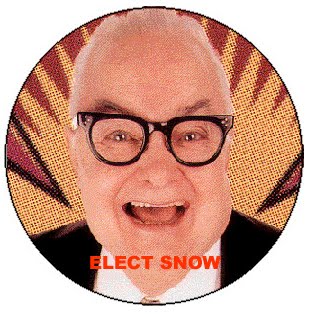
  6. President Snow was plenty creepy, but I always pictured him a bit like “Larry Bud Melman”
  7. Katniss’s last arrow fired. Had she not shot the person she had, I would have hated the whole series.
  8. The children at the end of Book 3. Nicely done.

So that’s my opinion.

If you’ve read The Hunger Games I encourage you to comment here about what you liked/disliked about the series and why you think it has been such a hit.

Thanks for reading.

Friday, February 4, 2011

Good vs. Evil: Getting to Know Angels & Devils


In my novel BLACKHEART there are both angels and demons alike. This posting is a quick summary to help you tell them apart, and sometimes it can be tricky. The angels and demons in my book are all based loosely on Christian, Jewish, Islamic or other accounts of angels. When researching angels and demons the one thing I found out is that our (human) knowledge of them is limited. Many of them have multiple names, jobs and backgrounds, depending on whose story you want to listen to. I’m sure only they know the truth, which has made them a fertile cast of characters for me, a fiction writer, to have inhabit the world of BLACKHEART.

How many different angels and demons are there? The highest number I’ve found is 300,000 fallen angels alone. And of course scholars have debated that whole “how many angels can sit on the head of a pin” thing for too long. Only 2 angels appear by name in the Christian Bible today (Michael and Gabriel). So what about all the others?

Note: I've left out a few angels and demons from BLACKHEART in this posting to avoid SPOILERS.

Hafaza

In Islamic mythology, the Hafaza are equivalent to the Christian concept of guardian angels. They help the soul fight off attacks from devils and djinn. My character, Noel August, is able to commune with them—which is both a blessing and a curse. At times they save her life, at others listening to them leads her into great peril.

Mastenem (The Lesser)

When Noah asked God to destroy all demons after the great flood, supposedly the demon Mastema intervened and asked that 10% of the demons be saved under his control to test mankind. God said “Yes.” (Thanks a lot.) These remaining demons that roam the earth are the Mastenem. Blackheart refers to them as the Lesser—and whenever he and the Lesser meet blood is shed. Their evil minds are simple and revolve around how to best inflict pain and harm on human beings. Their shapes vary, taking on aspects of monsters and beasts—all the better to terrify their victims. Besides their original demon savior, Mastema, all manner of greater demons take control of the Lesser, and use them for their schemes.

Semyaza

This name is sometimes synonymous for Satan, but in the context of BLACKHEART it refers to a class of angels who were cast out of heaven for teaching angelic secrets to man (like warfare and how to make weapons)—and for fornicating with women. ‘Nuf said.

Uhriel (or Uriel)

Known as “the fire of God” and “he who watches over thunder and terror,” in BLACKHEART (per some recorded accounts), Uhriel is the presider over Tartarus (Hell) and the leader of the massive angel guard that lives there, keeping all the damned souls and demons confined and delivering punishments as part of his thankless, daily routine.

Psychopomps

Per the Greek word, literally “guide of souls.” According to some cultures, souls do not immediately enter the world during birth, nor exit the world during death without some assistance. The transition between life and death is often aided by helpful spirits in animal form, the Psychopomps. In BLACKHEART Psychopomps make their appearance in the forms of voles, scorpions and fish, to name a few. My favorite example of Psychopomps in another work of writing? See “THE CROW” by James O’Barr.

Lucifer

With so many angels and demons in my book I’d be remiss not to mention Satan. Known by many other names, the baddest of the bad, the prince of evil, tempter of Eve and Jesus alike in some accounts he still walks the Earth. Pretty scary, I think. There are many accounts and variations of how he was thrown from heaven with his host of followers, but I like this one a lot:

Joseph Campbell (1972: pp. 148–149) illustrates an unorthodox Islamic reading of Lucifer's fall from Heaven, which champions Lucifer's eclipsing love for God:

One of the most amazing images of love that I know is in Persian – a mystical Persian representation as Satan as the most loyal lover of God. You will have heard the old legend of how, when God created the angels, he commanded them to pay worship to no one but himself; but then, creating man, he commanded them to bow in reverence to this most noble of his works, and Lucifer refused – because, we are told, of his pride. However, according to this Muslim reading of his case, it was rather because he loved and adored God so deeply and intensely that he could not bring himself to bow before anything else, and because he refused to bow down to something inferior to him (since he was made of fire, and man from clay). And it was for that that he was flung into Hell, condemned to exist there for eternity, apart from his love.

Thanks for reading.

Millions of spiritual creatures walk the earth 

Unseen, both when we wake and when we sleep.

~John Milton, Paradise Lost