Hey all! Agent Q here. Check out my latest post over at Finding the Yummy, where I talk about the CW's new show, Riverdale, and the dos and don'ts in adapting a beloved comic.
ARCHIE AND THE GANG GET CWED
Friday, January 27, 2017
Tuesday, January 3, 2017
A Lovely Way to Start 2017!
![]() |
| Firefly By Bruce Marlin Own work http://www.cirrusimage.com/beetle_firefly_Photuris_lucicrescens.htm, CC BY-SA 2.5, https://commons.wikimedia.org/w/index.php?curid=1536654 |
The world in the story has a train that is part animal, part vegetable and looks like a giant caterpillar. The train only has a minor role in this story; it is the lightning bug that has the major role. The story opens thus:
Lampyridae: Firefly. Female Photuris fireflies will mimic the mating flashes of other subfamilies of firefly, such as Photinus, in order to draw their males as prey. The mating behavior of the male Photuris includes their mimicking the flashes of the males of the Photinus subfamily, the prey that the female Photuris attempts to capture with her own mimicry. In this way predator and “prey” may find in each other a mate.Fireflies are wicked cool. In the story you will also meet two goats, Tinus and Turis, and a girl named Scrapie.
Here's the Table of Contents:
Fiction
"The Song of the Whistling Crab" by Michael McGlade
"One Thousand Paper Cranes" by Julie C. Day
"The Big Reveal" by David Stevens
"Scrapie’s Trap" by Lisa Bergin (That's me!)
"The Last Seven Eternities of Dr. Julian Slade, PhD" by Joshua Kamin
Poetry"One Thousand Paper Cranes" by Julie C. Day
"The Big Reveal" by David Stevens
"Scrapie’s Trap" by Lisa Bergin (That's me!)
"The Last Seven Eternities of Dr. Julian Slade, PhD" by Joshua Kamin
"Ship of Jinn" by Holly Lyn Walrath
"From the Dictionary of Nonexistent Words, A Sampler" by Kathrin Köhler
"The Last Word" by Gwynne Garfinkle
Artwork
Cesar Valtierra
I've read the edition - if you like a bit of horror and humor and speculation and the unknown, you will like these stories and poems. Also, there are horrific/humorous horoscopes!
And even better: in the same issue, my dear friend Kathrin has an amazing poem for word-lovers and dictionary-lovers. Please go read it!
For me the end of 2016 had a bitter taste of loss and estrangement, and I'd spent the last days of December with a whiff of dread for the coming year. And then this issue came out with me and Kat bound up in cyberspace together. I needed that reminder from the universe.
So: here's to 2017. Here's to hope. Here's to writers (and plumbers and mail carriers and philosophers and geeks and teachers and parents and friends and sweethearts and kids and...) doing our work well, with generosity and curiosity for what lies beyond. Here's to readers and listeners. Here's to you and here's to me and here's to exploring what lies in the in-between.
Labels:
Firefly,
Kaleidoskope,
Kathrin Köhler,
Lisa,
Publication,
Scrapie's Trap
Monday, October 17, 2016
New blog
Hey there, friends of the Scribblerati!
Long time no see, huh? Our blog has been silent lately, but we aim to change that! Claudia posted last week about Two Sentence Horror Stories, and now I've got a post up all about where I am with my writing. The trick is, though, the post is over at my personal blog.
So, if you're interested, click on over.
I hope you enjoy it,
Jon
Tuesday, October 11, 2016
Two Sentence Horror Stories: A Challenge!
In honor of Halloween, I've been looking at Two Sentence Horror Stories.
There are tons of them out there on the interwebs. Some are amusing:
a few are quite good:
but most are predictable:
And very few are complete stories:

Think about it. You can imagine that entire short story, fleshed (pun intended) out, beginning, middle, and end. Would it be worth writing out in full? Probably not, unless the author was exceedingly clever in their execution. Again, too predictable. But, as a Two Sentence Horror Story, well done.
But wait! Before I get all judgy in my judgebox - maybe I should try it myself.
*some time later*
Oh, crud.
Not easy.
But here's my attempt.
Cons: Not a complete story. Maybe too wordy? (Always my bugaboo.)
Pros: I think this raises a lot of questions, and gives readers room to speculate. I flatter myself to think all the possibilities are pretty creepy.
Whatever you think of the results, it's a terrific writing exercise. You have to be concise, and you have to be very specific. With such limited space, I found myself carefully choosing every word to paint a picture of who these characters are, and what motivates them.
Imagine approaching every line in your novel with such care. Somewhat exhausting, but I imagine the results would be worth the effort.
So then. If you dare, post your Two Sentence Horror Story below. Let the games begin!
This is hard, but fun. No one will judge you harshly. Give it a whirl!
-Q
There are tons of them out there on the interwebs. Some are amusing:
a few are quite good:
but most are predictable:
And very few are complete stories:

Think about it. You can imagine that entire short story, fleshed (pun intended) out, beginning, middle, and end. Would it be worth writing out in full? Probably not, unless the author was exceedingly clever in their execution. Again, too predictable. But, as a Two Sentence Horror Story, well done.
But wait! Before I get all judgy in my judgebox - maybe I should try it myself.
*some time later*
Oh, crud.
Not easy.
But here's my attempt.
Martha knew Janey's secret: the ever-growing belly she tried to hide under layers of boys' shirts and baggy sweaters.
As they walked deeper into the woods, Martha had a secret hidden beneath her clothes as well: their daddy's biggest hog knife.
Pros: I think this raises a lot of questions, and gives readers room to speculate. I flatter myself to think all the possibilities are pretty creepy.
Whatever you think of the results, it's a terrific writing exercise. You have to be concise, and you have to be very specific. With such limited space, I found myself carefully choosing every word to paint a picture of who these characters are, and what motivates them.
Imagine approaching every line in your novel with such care. Somewhat exhausting, but I imagine the results would be worth the effort.
So then. If you dare, post your Two Sentence Horror Story below. Let the games begin!
This is hard, but fun. No one will judge you harshly. Give it a whirl!
-Q
Sunday, May 29, 2016
Story Ingredients: What Makes a Story Great?
As some of you may know, I’m
currently a Creative Writing grad student. In the last class I attended, the
focus (and indeed the title of the class) was “The Successful Story.”
The professor of this
class and my fellow students were all fabulous and throughout the course had
some great insights and commentary about what makes (or breaks) a good story. During
this class I also had the opportunity to read more than 80+ short stories—some
by established/published authors, some by fellow classmates, some by aspiring
writers hoping to get published—and discuss what strengths and/or concerns each
of those stories had.
![]() |
| Fist Full O' Short Stories |
One of the key learnings
for me from this class—and this quantity of short story reading—is that it is a
rare thing indeed for a story to be perfect, to not have a concern or
two, no matter how well written or thought out. Likewise, it is also rare to
have a story with absolutely no merit—that even if there are certain glaring
problems with a story—often there are good things going on in the writing as
well.
Another take-away for me is
that not all readers (or editors/publishers) have the same criteria for
what might make them love a story vs. hate it. For instance, for some readers
having grammatical problems in the prose is a “deal breaker.” For me, as a
reader, I’m not as concerned about that (and can forgive it to an extent), but
if I don’t feel some emotional response to the story, or like at least one of
the characters, in the end I probably will not like the story—if I finish
reading it at all.
Following is a list of key story components (some from my
scrawled class notes) that might help make—or break—a story.
Plot structure
-
Scenario
-
En media res
(start in action)
-
Strong first
line, paragraph, page (I heard
author Joe Hill say recently that your most important thing that happens in the
story should probably happen on page 1)
-
Strong ending?
(Endings seem to be hard to get right)
-
Clear
conflict? Problems stated up front to help move the story (Hook!)
-
Back-story
-
Flashbacks
-
Layering
(complexity—more than one thing going on)
-
Timing
-
Twists?
-
Promises fulfilled
(character earns the reward)
-
Ambitions of
story achieved
-
Climax
(involving key players)
Characterization
-
Character change
(or lack of change) during story
-
New insight or
understanding by character
-
Motivation –
is it clear immediately what the character wants?
-
Flawed,
interesting characters
-
Indirect
characterization
-
Seeing how
main character interprets other characters (relationships)
-
POV (point of
view)
-
Convincing dialogue
-
Empathetic
characters (give me someone to care about)
Beautiful writing/prose/craft
-
Vivid, sensory
details, descriptions
-
Given only
details that matter
-
Strong syntax
(sentences, imagery)
-
Realism or
surrealism
-
Showing in
writing (vs. telling)
-
Letting reader
conclude what is going on (don’t over-explain)
-
Does the story
take risks? Stylistic or thematic
-
What’s unique
about the story?
-
Strong voice
(umph! not bland)
-
NOT passive
voice, vague details
-
Mastery of
language, unity of purpose
World Building
-
Setting
(details)
-
Strong sense
of time
-
Strong sense
of place
Pacing
-
A reason to
keep turning the pages
-
“Cliff hangers”
-
Character
motivation and goals
Emotional Response
-
Menace/danger/tension
-
Good times and
bad times for character
-
Does the story
have deeper meanings? Does it say something about the human condition or
society?
-
Is the story
memorable?
So there you have it—over
40 components that an author could consider and labor over in a great story.
Did I miss any?
For you as a reader or
writer, what’s the most important writing component to include—or get right—in
a story?
Do you have a “deal
breaker(s)” where you will stop reading if the author gets it wrong?
Mark
@ManOwords
Labels:
getting published,
Mark,
what makes a story great,
writing
Saturday, January 23, 2016
Writing & Rock & Roll
One thing I love about
writing is that once you record your ideas somewhere they sit there until you
can come back to them. I actually wrote most of this post about six months ago…
and I just ran across my notes today and decided to finish it up. It involves
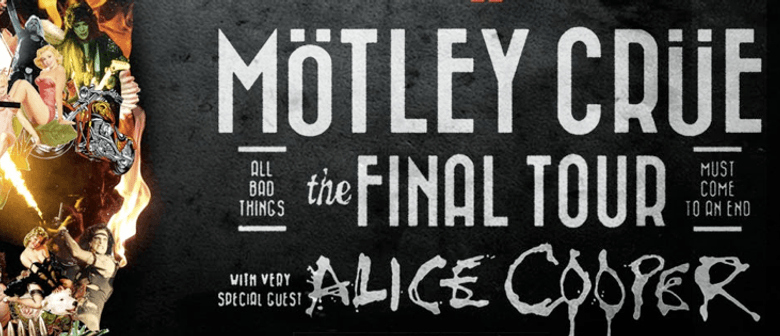
the music groups Alice Cooper and Mötley Crüe—who I saw courtesy of a friend
with an extra ticket (thanks, Chuck!) last summer. Supposedly for Crüe this was
one of their last performances ever. But I know for a fact they’ve been back to
Minnesota playing again within the last couple months.
The concert itself was a
blast—and the reason I’m bothering to bring it up now is that for me it was something
outside my norm. I think that’s important for everyone to do something outside his
or her usual routine every once in a while, but especially for us writers. Not that I
haven’t gone to a rock concert from time-to-time, but it’s not my usual thing. Experiencing
something new or different often inspires my writer’s mind and helps me make
new connections. I’m not saying I got a new character or story idea out of this
particular concert—yet—but who knows? Part of the writing process includes the
thinking process—and letting thoughts/ideas “compost” over time.
There’s also this quote
about writing that I’ve always liked by Anaïs Nin, “We write to taste life
twice, in the moment and in retrospect.” So, in the spirit of that quote, belatedly, here is…
A Concert Guide: How to tell Alice Cooper apart
from Mötley Crüe
Best
in-concert upside-down drum solo/roller coaster ride: Mötley Crüe
LargestFrankenstein Puppet: Alice Cooper (12’+)
Most
worked up audience members: the row of 8th graders behind us
Most
skimpily clad back-up dancers: Mötley Crüe
Tallest
scaffolding: Mötley Crüe
Alice
Cooper song best heard live: Billion Dollar Babies
Loudest
Explosion(s): Mötley Crüe
Most
predictable beheading: Alice Cooper
Light
show most likely to trigger epileptic seizures: Mötley Crüe
Sharpest
sword: Alice Cooper
Costliest
beer: Xcel Energy Center ($9 each)
Worst/most-absent
camera “close-up” operator: Alice Cooper
Three ballads that work
less well as a middle-aged audience member than
when I was in middle school:
I’m Eighteen (Alice
Cooper)
Smokin’ in the Boys Room
(Mötley Crüe)
School’s Out for Summer
(Alice Cooper)
Song
with the most fire/pyrotechnic accompaniment: Shout at the Devil (Mötley
Crüe)
Most
miraculous recovery from a guillotine wound: Alice Cooper
Most
satanic symbols: Mötley Crüe (but it’s a close call)
Closest
Affiliation with the Devil: Tie- Alice Cooper and Mötley Crüe
“Ear
worm” that I suffered from for a few weeks after this concert: TooYoung To Fall in Love
So
there you have it. For my fellow writers out there, may your New Year bring you
lots of writing, rock and roll and a new experience or two for inspiration.
Mark
@Manowords
@Manowords
PS>
And if you get a chance to see Alice Cooper or Mötley Crüe as they come through
on their next retirement tour, I’d highly recommend it
Friday, November 6, 2015
Rejection Success!
I found I needed those treats less and less as I went along. Maybe my skin got a little thicker. Maybe I just got too busy to treat myself to a walk in the rose garden off of Lake Harriet. Maybe the process of rejection-resubmission just became a habit.
Well, it's been about six months since I started on my goal and even though this beautiful weather may be deceptive, summer has indeed
come and gone.
I imagine you've all been on pins and needles: did she make her goal? Did she? Did she?
Indeed she did.
I logged 20 rejections on September 4th. After I had started back to teaching (my internal end of the summer marker), but well before the official end of summer.
Here's one of my favorite rejections:
Thank you for submitting "Old Glassy's Way." Although it's not quite the right fit for this issue, we very much enjoyed it. Best of luck with this piece, and please consider sending us more work in the future. (We will be guest-editing a second issue in the spring.)
But I also like getting rejections like this one, because they help me improve the story:
I’m sorry to say that I don’t believe your story will be a good fit for our anthology. Thank you very much for your submission.
The following comments are not necessarily revision suggestions. They are intended to help you see your story from another perspective.
Notes:
- What do Otha and Bernie have in common such that they are peas in a pod? They look nothing alike, they are of vastly different ages, and “even there, in the recesses where things matter, Otha was nothing like her.”
- The opening of this story is quite the info-dump. The dialog and action don’t really get underway until a third of the way through the story. My interest as a reader began waning around page 5.
- Who is the narrator? Who is the audience?
The following comments are not necessarily revision suggestions. They are intended to help you see your story from another perspective.
Notes:
- What do Otha and Bernie have in common such that they are peas in a pod? They look nothing alike, they are of vastly different ages, and “even there, in the recesses where things matter, Otha was nothing like her.”
- The opening of this story is quite the info-dump. The dialog and action don’t really get underway until a third of the way through the story. My interest as a reader began waning around page 5.
- Who is the narrator? Who is the audience?
I'm up to 33 rejections. 23 form rejections and 10 personal ones. Whoo Hoo!
I use a really nice tool to find good markets and to track my submissions: Submission Grinder.
Check it out! And then come join me on the rejection mill! It's really the only way to get yourself onto the acceptance wheel!
Labels:
goals,
Lisa,
rejections,
Short stories,
Submission Grinder,
submitting stories
Subscribe to:
Posts (Atom)