Showing posts with label Lisa. Show all posts

Tuesday, January 3, 2017

A Lovely Way to Start 2017!

Firefly By Bruce Marlin
Own work http://www.cirrusimage.com/beetle_firefly_Photuris_lucicrescens.htm,
CC BY-SA 2.5, https://commons.wikimedia.org/w/index.php?curid=1536654
Lisa's first publication has hit the interwebs! Scrapie's Trap, one of the stories in her Insect Cycle, has been published in the on-line journal Kaleidotrope. And, appropriately, the art for the edition is a tech-spider.

The world in the story has a train that is part animal, part vegetable and looks like a giant caterpillar. The train only has a minor role in this story; it is the lightning bug that has the major role. The story opens thus:
Lampyridae: Firefly. Female Photuris fireflies will mimic the mating flashes of other subfamilies of firefly, such as Photinus, in order to draw their males as prey. The mating behavior of the male Photuris includes their mimicking the flashes of the males of the Photinus subfamily, the prey that the female Photuris attempts to capture with her own mimicry. In this way predator and “prey” may find in each other a mate.
Fireflies are wicked cool. In the story you will also meet two goats, Tinus and Turis, and a girl named Scrapie.

Here's the Table of Contents: 
Fiction
"The Song of the Whistling Crab" by Michael McGlade
"One Thousand Paper Cranes" by Julie C. Day
"The Big Reveal" by David Stevens
"Scrapie’s Trap" by Lisa Bergin (That's me!)
"The Last Seven Eternities of Dr. Julian Slade, PhD" by Joshua Kamin
Poetry
"Ship of Jinn" by Holly Lyn Walrath
"From the Dictionary of Nonexistent Words, A Sampler" by Kathrin Köhler 
"The Last Word" by Gwynne Garfinkle

Artwork
Cesar Valtierra 

I've read the edition - if you like a bit of horror and humor and speculation and the unknown, you will like these stories and poems. Also, there are horrific/humorous horoscopes!

And even better: in the same issue, my dear friend Kathrin has an amazing poem for word-lovers and dictionary-lovers. Please go read it! 

For me the end of 2016 had a bitter taste of loss and estrangement, and I'd spent the last days of December with a whiff of dread for the coming year. And then this issue came out with me and Kat bound up in cyberspace together. I needed that reminder from the universe.

So: here's to 2017. Here's to hope. Here's to writers (and plumbers and mail carriers and philosophers and geeks and teachers and parents and friends and sweethearts and kids and...) doing our work well, with generosity and curiosity for what lies beyond. Here's to readers and listeners. Here's to you and here's to me and here's to exploring what lies in the in-between.

Friday, November 6, 2015

Rejection Success!

In a previous post I  wrote about my goal to get twenty rejections before the summer was out.  I put six short story's into the submission mill and every time I got a rejection, I sent that story out again within the next day or so. I also got some nice treats from my loved ones to help ease the sting of rejection.

I found I needed those treats less and less as I went along. Maybe my skin got a little thicker. Maybe I just got too busy to treat myself to a walk in the rose garden off of Lake Harriet. Maybe the process of rejection-resubmission just became a habit.


Well, it's been about six months since I started on my goal and even though this beautiful weather may be deceptive, summer has indeed
come and gone.

I imagine you've all been on pins and needles: did she make her goal? Did she? Did she?

Indeed she did.

I logged 20 rejections on September 4th. After I had started back to teaching (my internal end of the summer marker), but well before the official end of summer.

Here's one of my favorite rejections:

Thank you for submitting "Old Glassy's Way." Although it's not quite the right fit for this issue, we very much enjoyed it. Best of luck with this piece, and please consider sending us more work in the future. (We will be guest-editing a second issue in the spring.) 

But I also like getting rejections like this one, because they help me improve the story:

I’m sorry to say that I don’t believe your story will be a good fit for our anthology. Thank you very much for your submission.

The following comments are not necessarily revision suggestions. They are intended to help you see your story from another perspective.

Notes:
- What do Otha and Bernie have in common such that they are peas in a pod? They look nothing alike, they are of vastly different ages, and “even there, in the recesses where things matter, Otha was nothing like her.”
- The opening of this story is quite the info-dump. The dialog and action don’t really get underway until a third of the way through the story. My interest as a reader began waning around page 5.
- Who is the narrator? Who is the audience?

I'm up to 33 rejections. 23 form rejections and 10 personal ones. Whoo Hoo! 


I use a really nice tool to find good markets and to track my submissions: Submission Grinder. 

Check it out!  And then come join me on the rejection mill! It's really the only way to get yourself onto the acceptance wheel!

Friday, September 4, 2015

Six Years of Writing

Six years ago Lisa, Jon, Shawn and myself met up at a Science Fiction class at The Loft, taught by Lyda Morehouse. We instantly recognized each other as kindred spirits and started a writing group (I think it was Shawn’s idea, really, but as usual, we all went along with it). Because the universe can only handle so much bad grammar, it sent us Claudia to balance things out.

During that time we’ve met once or twice each month and have each grown a lot as writers (and critiquers—is that really a word, Claudia? You’ll know).  Each of us has completed at least one novel length manuscript during that time, in some cases more than one. Dozens of short stories have been written, and even a few poems and a novella. All this work has been routed and discussed through our group, novel-length revisions have been made multiple times. To say the least we work hard and are committed to our craft, despite the lack of pay.

There are rejections, sure, lots of them. Lisa has even made it a personal goal to get a bunch of them this year (20?). But there are also signs that our work is paying off. There have been promising conversations with agents and editors—and a few requests to see more. There have been some writing awards (Mark) and even some publications (Jon). We’ve even self-published a “sample book” featuring some of our writing and together gave a presentation at a Sci-Fi convention on what it is to have a great writing group. Over time all this attention to writing seems to be leading us in the right direction.

Part of our writing routine has been posting to this blog—although in the last year we really haven’t been very reliable on that front. But, in six years we’ve published 224 blog posts with over 42,000 page views and 675 comments. That’s a lot of conversation about writing!

In case you’d like to go back and see some of our more popular blog posts, here are some highlights, featuring the top two posts for each Scribblerati agent.

The Scribblerati’s Top Posts of All Time

Two Years Later by Jon Hansen
Our number one post of all time… showing what we were up to four (!) years ago. Maybe we should have Jon do an update?


Dinosaurs vs. Humans by Mark Teats (Mark’s top post)


In Praise of Big Noses by Q aka Claudia Hankin (Claudia’s top post)

The Random Post by Shawn Enderlin (Shawn’s top post)

The Great Word Debate by Claudia Hankin (tied for most commented-on post, but also a generator of a number of other 'spin-off' posts)


On Words, Big and Li'l, All Those I do not Know by Lisa Bergin (Lisa’s top post)


So happy anniversary Q, Shawn, Lisa and Jon. It’s been a great six years and I for one appreciate all the support, feedback and ideas that our group constantly gives to each other. More importantly I always look forward to reading what you’ll write next. Damn we’re good.

By the way: it’s now your turn on the blog.

Mark
@ManOwords

Friday, May 29, 2015

A New Goal

Last weekend I attended Wiscon, aka The World's Leading Feminist Science Fiction Convention. I picked up some tips at a session on writing while parenting. I was awed by the Sierra Nevada mountain range during a slide-show presentation by Kim Stanley Robinson about the work of nature writer/environmental activist John Muir. I was inspired by readings and speeches by this year's Guests of Honor (the aforementioned KSR and Alaya Dawn Johnson.) I had the start of my WIP critiqued by fellow writers under the guidance of the very generous Delia Sherman.  I bought a pile of books. I sold two felted creatures. I connected with Wiscon friends.

All around another grand weekend binging on science fiction and fantasy.

But by far the highlight was a workshop on submitting your short story for publication. Here's the program description:

Bring your laptop and learn how to write a query letter, format your story, and choose markets -- and submit it, right at the con! A supportive Den Parent or several will be around for hand-holding and advice. Bond with your fellow writers just starting out, and take concrete steps towards getting published.

And was I ever in need of supportive Den Parent.

Before going to this workshop I had, of course, submitted my work many, many times. To my writing group, to my best friend, to my partner, to my mother...you get the drift: not so much submitting to the publishing industry. Well, good news, that reluctance has now been tamed into submission. I sent off "Birch and the Queen of Dirt" during the session.

Excited by that first step, I decided to submit "Old Glassy's Way" over lunch.


I still hadn't gotten enough; the next day, "The River's Edge" got zipped out into the world.

So far I've gotten two form rejections. Bummer, right? Time to sit around for a couple of days moping for sure.

But no! I took those two stories and I resubmitted them as soon as I got the news.

Here's what's helping me make it through the disappointment rejections inevitably bring and still hold on to the tenacity needed to keep submitting:

  1. I've decided to make this a practice. When I get a rejection, I will find another potential market for the story and send it out again right away. I'm good with setting rules and following them.
  2. I've been inspired by writing friends who have 80-100 rejections under their belt. You can't be published if you don't send your work out, after all.
  3. I've given myself a new goal. It is not to get published; I've tried to set that target a bit to the side. Instead, my mission is to get 20 rejections by the end of the summer. If I get them, I'm calling it a success and I'm taking myself out for a fancy dinner.
  4. I've also given myself a reward system for each rejection: my best friend, my sweetie, and my mother are all in charge of coming up with 6-7 ideas for small treats. When I get a rejection, I get to ask one of them what my next treat will be. So far I've gotten an invisible love poem (with the pen/light that makes the writing glow in the dark) and I've got another treat coming in the mail. So when I get a rejection my response is "Yippee, a new surprise treat for me!" I love surprises. I love anticipation. I love little treats. I will get those treats, I tell you. I WILL GET THEM ALL! 
I admit when I got the first two rejections, there was still a bit of "Dang, why didn't they love my story as much as I do?" But so far I'm still excited to be resubmitting.

And I'm already a tenth of the way to my goal.


Friday, March 13, 2015

Scratch Scratch Scratch: Work of the Hand


I've been playing around with my writing method.

Until recently my writing practice has really been typing practice. A bit of hand sketching here and there, but almost exclusively I typed my stories into Scrivener from first drafts to last. I love Scrivener. I often have something of a mathematical formula for my stories (not the same formula, but each story has it's own pattern of interwoven POV, narrative, poetry hoo-ha) and Scrivener works well for the formalism I like to play with. So, again, I love Scrivener.

What I don't love is staring at a screen for so much of my day. And so I've been thinking about what it means to expand out beyond typing.

One help has been Jeff Vandermeer's Illustrated Guide to Creating Imaginative Fiction, Wonderbook. A great title, extremely evocative and inspiring illustrations, so much advice that I feel like I'm missing huge chunks of it. And so I'm reading very slowly and playing around with his advice.

One piece of advice I've tried for a couple of months now is to use notecards to create story. Notecards are low tech, you can have them everywhere, you can jot down ideas and later arrange them to your liking. It makes a lot of sense, but it just doesn't seem to completely work for me. While I like the portability of the notecard, I seem to always want to get more written on them than I have space for. I do still have them around my haunts (work desk, dining room table, backpack...) for when inspiration hits. And they have been really helpful for not losing ideas. In past, I would have an idea and work on imprinting it in my brain until I was confident I'd be able to recall it later when I had a chance to write it down, especially when if felt like such a freakishly cool idea....and then poof! there it went, sucked out of my head and on to the great idea miasma in the skies. So, thumbs up for adding in a bit of notecard scrawling.

Trying out notecards evolved into wondering more about the value of handwriting story. I loved Mark's recent blog about reading your work aloud; I very, very often do that and I think it has helped my writing have the right cadence. Reading out loud also gets more of the body involved in the writing; the breath, the throat, the tongue. For someone who thinks and writes a lot about body, that's a gift; I'm always looking for ways to integrate the mind and body more fully. And handwriting, too, seems to do that integration work as well.

Two events got me really thinking a lot about handwriting. I heard about some research concerning the value of handwriting in making neural connections in the brain, just as a friend sent me a blurb about a recent Lynda Barry book, Syllabus, in which she offers up her handwritten lessons from her writing workshops.

First the research, as summarized from The New York Times article: "When the children composed text by hand, they not only consistently produced more words more quickly than they did on a keyboard, but expressed more ideas." Now I'm a wicked fast typer, so I'm not sure whether or not I produce more words handwriting or typing, but that last part of the quote, about producing more ideas while handwriting, that gets my attention because I want my writing to be full of ideas. For me one of the joys of writing is to really explore ideas, even to come to them through the act of writing.

Now, Lynda Barry. Cartoonist, Novelist, Artist, Teacher. I love Lynda Barry. I once lived in a co-op house we called Marlys House after a favorite of Lynda Barry's characters. She is one of the reasons I am proud to be a human, that our species has produced this woman. Please if you have not read anything by her, do yourself a favor. Cruddy. One! Hundred! Demons! What It Is. Etc. Etc.

Lynda Barry is big on handwriting. Or better yet, she is big on playing with different ways of drawing words in order to get to your story. She is big on slowing down. She is big on using the hand. I love what she has to say about the creative connections between story and art. She didn't type her novel, Cruddy. She didn't write it with pencil and paper. She painted it. She used a paintbrush on legal paper. That's how she got her ideas down on paper. And it's a stunner. Read her thoughts about the process here.

My son goes to a Montessori school and every day they get to draw, but his teacher calls it "Work of the Hand." I love that phrase.

And I've been trying to do more of it. Practicing the work of the hand.

And it seems to be helping me re-invision what I have in the past thought of as my incredibly slow coming-to-new-story-ideas process. I now think I maybe just didn't have the right process for generating ideas. Instead I might all along have just needed to put a pen, pencil, (paintbrush?) in my hand and let that hand start to scrawl and scratch and those dark lines would be just the opening for ideas to seep and flow. Because that's exactly what they're doing, those ideas: seeping, flowing. Like a tight, selfish fist has relaxed, opened up and what wonders are written there on the palm.

I'm gonna try it some more, this old-style technology, this fancy handwriting. See where it might take me.

Next up ~ Shhhhh: the Role of Quiet.

Monday, November 24, 2014

Where are we?


Hey there.

As many of you have no doubt noticed by now, we, the varied and sundry Agents of the Scribblerati, have not been too active here on our blog of late. Now, I'm sure over the course of the last few days/weeks, many of you out there wanted to write or call and give ease to your desperate rush of concerned questions. I'm sure some of you, in your panic, maybe even considered contacting the authorities. Completely understandable, completely, but ultimately unnecessary. Everything's cool. Everything's fine. I'm here to calm your fears, my friends, to soothe your nerves, to grammatically rub your back in slow circles all while whispering: "Don't worry, my friends, we're here now."

But where have we been?

Good question. The short answer is: We've been busy. But how busy? Well, that's a longer answer. Read on, my peeps, read on and let the Scribblerati make their own excuses...

Mark


I'm doing lots of writing lately--filling notebook after notebook with of all things, Poetry! This is first most on behalf of my "Groundings in Poetry" class--part of my MFA program at Hamline--but I'm really enjoying it. (My instructor Deborah is also awesome--very supportive and encouraging.) My default when writing is to write fiction (and often novel)--but poetry forces me to write differently (shorter, for one) and write about "truths." I think it is also acting as "therapy" for me--about half of what I'm writing is about dealing with recovering from cancer. I won't say it's good writing--but I'm getting it out of my system. A requirement for this class is to also complete a 30-page chapbook. It is taking shape!
My undead novel, SUNLIGHT is about 30 pages away from being a complete 2nd draft. My goal is still to knock this out before the end of January.
This summer I also joined a second writing group in Eagan through my local church. It's been fun meeting other writers who live right in my neighborhood. There are all levels and styles of writers in that group--and it's been great having a different audience for me to give/receive feedback from. (A shout out to Bruce, Rich, Jodie, Roxane and Kate!)
I've sent out a couple short stories this year in hopes of publication. So far only rejections on that front--but I'm also not trying very hard. I do have a poem entered in a contest that will be judged in early December. Fingers crossed....

Shawn


Where's Shawn at? On the one hand, procrastinating. On the other, in the weeds. To Kill the Goddess is done, pending a copy edit. When will that happen? Once I get further along with Book 2, which is in said weeds. I have a little over one third of the first draft done, but this book is a bear. Book 2 is – at its heart – an old school order vs chaos fantasy epic (think Michael Moorcock) and the writing of it pretty much embodies the topic. The story wants to cut loose and go every which way. For now I'm letting it, but at some point I'm going to have to impose some order and wrestle the darn thing into shape. Elric would sympathize.

Claudia


Claudia has temporarily set aside her book to pursue her passion for herpetology. It turns out, however, that the snakes won’t enact the little scenes she writes for them, so she’ll be heading back to her 3rd draft of Ursula Evermore and the Case of the Man who Wasn’t soon.

Lately, Claudia’s writing has consisted mostly of press releases. She feels pretty lucky in her day job, where she gets to work with The Moving Company, a national theater company based in Minneapolis. She’s been busy this month helping to launch their production of Love’s Labour’s Lost. A review. It's now showing in Minneapolis, click here.

Lisa


1). She's finished trying to weave her five post-plastic apocalypse stories together into a novella and awaiting Scribblerati's comments on how successful she was
and
2). Has tried her hand at a fairy tale, trying to get at the power of fear of our deepest desires. What she likes most about the hero of the story (Birch) is the tattoo of an octopus arm that she was given by the sea; what she likes most about her anti-hero (the flat-chested woman) is the lengths she will go to quiet her fears. Lisa also likes the trees which were once whales an awful lot too.
and
3). She's contemplating her next story. She thinks it will involve a girl and an acorn. An acorn of a girl? It's still shadowy.

Jon


And me?

I'm currently finishing up a small writing project. I've talked about it on my own blog. Long story short? After my last WIP crashed and burned, I have been spending some time on a quartet of story ideas, writing a rough 1st Chapter for each one. I'm just about done with the fourth and final one now. It was a fun exercise, a creative workout, and I'm hopeful one of the eventual results is a ready and waiting springboard into future projects, plus, that it will stop those nascent, but very insistent book ideas from rattling around in my head, clamoring for my attention, and generally distracting me while I'm busy trying to focus on my next project.

What is that next project?

I intend to return to a former WIP that I finished the 1st draft of about two years ago. I wasn't very happy with that draft at the time, I felt it needed a lot of work. So, after it was done, I set it aside to let it stew a bit. In the time since, I've just been kind of thinking about it in the back of my head, and I've finally hit on some ideas concerning what to do with the book moving forward. I'm ready to dive back in. So that's my plan for the new year. Hopefully by Fall I'll have a brand spanking new 2nd draft all done. Hopefully.

Also, there was this here: My Short Story. I was a bit busy with that too.

Woo.


So, that's it. That's the news. That's where we've all been lately. Time marches on, and the Scribblerati are busy entering a new phase in their careers.

Keep an eye out for us, folks, we're doing stuff.
Jon

Friday, July 11, 2014

A Peck of Villains

As you may know from previous posts, I spent my winter and spring reading the novels and stories from Le Guin's Hainish World. I made sure to request later editions from the library so I could read the introductions. Written by Le Guin well after she wrote the pieces themselves, they are full of her later thoughts on each piece, as well as her ruminations on writing.

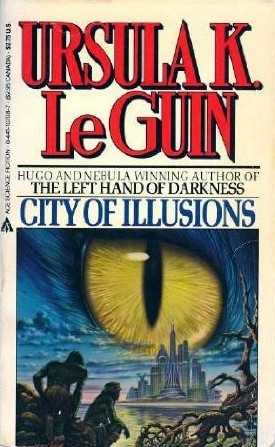
In her introduction to City of Illusions she touched on something that I find I'm struggling with in my own WIP.

Villains.

Le Guin's thoughts:
Real villains are rare; and they never, I believe, occur in flocks. Herds of Bad Guys are the death of a novel. Whether they're labelled politically, racially, sexually, by creed, species, or whatever, they just don't work. The Shing are the least convincing lot of people I ever wrote.
In the series of integrated stories I am finishing up, I've got some baddies that I'm just not all that satisfied with. They are called Thority (a "what if" spinning out of a world in which the transit authority ends up as the sole organization, and having access to resources they can wield quite a bit of power.)

Mostly these baddies are in the background, just another feature of a world that has newly fallen apart, one of the many defining features of the new environments within which my characters must make their decisions about how best to live their lives. That's probably one piece of why I'm dissatisfied with them: there are no unique Thority members as a characters, so they are all just a grey wash of badness.

As the stories have evolved, I've found myself needing to explain why they are bad. I didn't want it to just be because Power Corrupts. Maybe that impulse was a good one, a step away from the grey wash and the Herds of Bad Guys that Le Guin regrets in her own writing. If you give the bad guys a story, rather than just having them fit a category, maybe they will be more interesting. More real.

But the story I have told has explained away their moral culpability. They've got soft-wiring that's gone glitchy. And right now it feels again that I'm taking a step back toward category-badness. I didn't set out to write a zombie story, but in way I think Thority have ended up fitting into that trope.

Which has gotten me thinking about the Zombie trope itself. Given that it has been so popular, it seems that many folks are convinced by the mass-bad-guy. Or is it that zombies work as background, but never as real characters in a story? The real enemies are ourselves, and other folks just like ourselves: unique individuals with individual histories, wants, and needs. Individuals who all must interact with one another within the environments they find themselves (which may contain zombies like Jon's Gunslingers or zombie/vampires like Mark's Sunlight or as in my story cycle: radiation, strange new diseases, the reemergence of old diseases, self-aware plant/animal trains, and zombie-like Thority-figures...).

So maybe Thority really aren't the villains in my stories. Maybe no-one in them is. Maybe all my characters are each doing the best they can with what they have, even if that best sometimes results in a whole lot of pain.

Saturday, May 31, 2014

On Not Taking Short Cuts

I'm just returning from Wiscon and am on a writing spree. All I want to do is write - for hours and hours. I have to tell myself to stop so I can get all the other necessaries done. And then I don't listen and keep on writing over the growling of my stomach.

So, for me the conference was a success. The panels, the readings, the conversations about reading and writing all helped re-awaken those creative muscles. (Plus, it doesn't hurt that the semester is over and my reservoir of ideas isn't being tapped by planning classes.)

One of my "conference sparks" flashed during the writing workshop. I got good feedback on the story I'd submitted, but some of the conversation surrounding another participant's story has, so far, helped me the most.

In that workshop Kat Köhler offered her view that she's personally tired of reading stories about abused women. Because her comment wasn't in reference to my own story, I wasn't taking notes, but this is some of what I remember of her thinking: Abused-woman is a very common theme that has been overdone (making it seem as though this is what women have to accept as the reality of their future lives.) Also, it is often not done well because the healing from the abuse is too easy and/or unrealistic (quick fixes like finding a new partner.)

And I realized I'd done exactly that in the story I'm currently revising.

So, I thought I'd try something different to see what might happen to the story. And in the process of re-visioning, I realized that the abused-woman side-story (at least in my own story) was just a short cut, a cheat. I wanted a quick way to bond Cecily and Zamzam, and what better way (I thought) than to have Zamzam be instrumental in Cecily's getting away from an abusive boyfriend. It was all quick-quick, and no thought. Because woman-as-abused is a cliché, you feel as though you can just fall back on it without inviting or offering any real exploration. (And of course, when I say "you," I am really meaning "I"!)

Rather than offering a clear vision of a unique life or inviting the reader to think/feel deeply, that device, it seems to me, merely offers up to the reader an empty box. A place-holder. A throwaway. And it feels now that this might be the heart of the matter: who wants their words to be empty boxes? Writing isn't about taking the easy way out. That's the very opposite of creativity. Creativity is meant to offer something new to the world.

I've been having fun exploring how to rewrite the scene. I think it is better. I know I understand my characters better. I also know it became more personal: rather than using an empty box to stand in for real writing, I wrote out of my own experiences.

Here's a taste of the before:

Zamzam wasn't fooled by my lies about bumping into the cabinets. Twenty years younger than me, but twenty years wiser. She hauled me to the self-defense class she led for Somali women.  
I stood out, the only one in the room without a hijab. At first they kept their scarfs on because of me, but eventually they must have decided I was alright, and they'd take them off for the rough and tumble.  
It wasn't what I learned in that class that gave me what I needed to end that eight year on-off with Nicky. It was knowing I wouldn't be able to look into Zamzam's clean brown eyes if I ended up sporting another bruise. Nicky came at me for the last time and I crushed his cheekbone, put him in the hospital.  
Never saw him again. 
By the time he would've gotten out, the restraining orders were in place and we'd moved away.
And now that scene after the revision:
One evening when Nicky was out late with friends, Zamzam invited me for dinner. I remember we ate Somali tostadas that first night. Urbano in the kitchen making the flat bread they called canjeelo. It became a regular ritual: Urbano cooking, while Zamzam and I got in his way, picking at his ingredients, the two of us chattering away, laughing.
But Zamzam saw through the brightness of my smiles, my joking complaints about Nicky. She teased me years later that it was the way I watched her and her husband; always the scientist, compelled to explore the unknown.  
And I did watch Zamzam and Urbano. I noticed the way a smile would creep into her whole body whenever he entered the room, I took in how when he would put a hand on her hip or the small of her back, needing her to move out of the way of his chopping, and she would lose the train of her words. I heard the subtle vibrations in their voices as they so casually called to each other from across the apartment: Amor de me vida. Gacaliso. Amorcito. Habibi. I heeded those observations; the world was trying to tell me something. Being with them, that’s when I first saw a truer color of love. One that might flow between two people and fill a room, reeling anyone paying attention into its embrace. 
Thirty years younger than me, but forty years wiser, Zamzam hauled me to the yoga class she led for orthodox Somali women. I stood out, the only student without a hijab. At first they kept their scarfs on because of me, but eventually they must have decided I was alright, and they’d take them off for the vinyasas.   
It wasn’t really what I learned in that class that gave me the centering I needed to end that thirteen year on-off with Nicky. It was knowing I wouldn’t be able to look into Zamzam’s clean brown eyes if I explained one more time how Nicky was not so argumentative, was less dismissive when it was just the two of us. How things were good enough for me. Good enough for now. 
So I called it quits and I found myself gathered up into a more true family. The Telarañas: Zamzam, Urbano, and me. 
Some closing thoughts. Writing empty boxes is quick: they really are short cuts! The new version is much longer. And, as Mark nicely reminded me at Scribblerati's last critique session, even short stories need to be mindful of word count. I haven't really done that kind of trimming work since I started focusing on short stories.

May I find that balance between the real and the compact.

Friday, March 7, 2014

5 Writers on: Inspiration, Rituals, Writing Tools, Fav Authors, Advice for Beginning Writers, Characters like us...


It’s been a while since we’ve done an update on what we’re all up to with our individual writing. Mark decided to take it easy this month and interviewed the 5 writers who make up the Scribblerati—their answers wrote this blog. It's a long post, but we hope it's worth you while. For you fellow writers maybe there is even some shared wisdom here you can use. All is revealed--thanks for reading!

Our Current Writing Projects
Claudia Hankin: I’m still struggling through the 3rd draft of my novel, Ursula Evermore and the Case of the Man Who Wasn’t.  At this point, sadly, there are more hash marks in the ‘challenge’ column than the ‘enjoy’ column. I just want to be done and onto the next step (finding and agent, a publisher). I think every author goes through this, or a version of it. I have so many ideas for new projects, but, I’m stubborn.  As Neil Gaiman advises - “'Whatever it takes to finish things, finish. You will learn more from a glorious failure than you ever will from something you never finish...” The question is, when is it time to let go?

Shawn Enderlin: I’m currently working on two projects: finishing up my final round of edits on To Kill the Goddess and working on the first draft of the sequel, which has a working title of Moon Sister. Both are exciting in different ways. On the one hand, I can’t wait to be finished with To Kill the Goddess! On the other I’m having fun exploring and tackling new challenges.

Jon Hansen: I've started a new WIP that I'm about a third of the way through on the first draft. I've got another one waiting for me to start its 2nd draft and a third on the backburner while I think about the intent of the story, plus its goals, purpose, and approach. Right now, at least with the new WIP, I'm really enjoying the freedom and the focus. It's flowing really easily. I have a good idea what I'm going to do for the whole thing and a pretty good half-formed idea of what I'm specifically doing at the end that I'm letting simmer for now. All in all, I'm feeling confident about the final product. I anticipate having a 1st draft done by summer. The most challenging part is just the usual stuff right now: Specific words and a general fear of whether or not it will all come together. (Jon)

Lisa Bergin: I'm working on a series of related short stories that I think of a post-apocalypse utopia. They are my response to a common philosophical position I hear from students: that people are at core egoistic and just out for themselves. I've never really bought that view and this is my attempt to explore it, putting people in a bad situations and thinking through what decisions they would make. And they are always making decisions based not (only) on their own well-being, but the well-being of others.

Mark Teats: I am balancing the polarity of being an MFA creative writing student and being an independent writer these days. The thing I'd most like to work on is my vampire-apocalypse novel, Sunlight. It’s not getting as much attention as I’d like these days. Simultaneously I’m also working on a new required short story for my class, working title Encounter. This has been fun/challenging/different because each week so far we have been asked to rewrite some aspect of the story (including doing a complete re-write from scratch without looking at the original). It’s being both fun and challenging. It’s making me think a lot about aspects of story and how to approach a story differently than I might usually.

Where We Find Inspiration
Other art. Any kind. It all inspires me to make my own creation. (Shawn)

I just like to do it. I also don't wait for inspiration, I think it's a trap. Dedication and discipline are more important, I think. I believe that if you want to get it done, you just have to get to it. Some days are harder than others, sure, but mostly I just sit down and start somewhere and sometimes it leads to something and something it doesn't. Other times I see/read/hear something that I liked the idea, but not the execution, so I try to write my version. (Jon)

This series started with a dream. So that's one place. Also: other stories, science reporting on NPR. I think I often find inspiration just in the act of writing from the perspective of a character. (Lisa)

Lately, reading lots of really phenomenal short stories by other writers (lots of class reading). (Mark)

Claudia: Many sources. I once wrote a play based on a dream. Another play came from a chance encounter with a transvestite. I am a huge movie and TV buff, and even when I see a bad film, I like to rearrange it in my head and make it better. With good movies and television, I pay attention to the writing - I’m not often surprised, but when I am, I take note.
I also am the administrative manager for a theater company, The Moving Company (for you Twin Citians, it’s made up of former members of Theatre de la Jeune Lune). It’s inspiring to being around people who are that powerfully talented. They’ve been creating art so well and for so long, that making something extraordinary is the least of their worries. It’s hard to wallow in Writer’s Blockdonia when you’re around that kind of energy.

On “Sacred” Writing Spaces and/or Ritual(s)
No. Sometimes I write at the dining room table. Sometimes at this little TV table in front of the TV. Sometimes at the coffee shop. Mostly I just need to be left alone and sit at a table/counter comfortably, then I'm all right. (Jon)

Not sacred so much - but I'm usually sitting cross-legged on my couch with my laptop.
Tho' when I'm first trying to find my way into a story I often have to write with pen and paper.
(Lisa)

Sacred is too strong a word, but I do have a bit of a ritual. I like to write in the mornings, which means I start out by making a cup of coffee and then sequestering myself away in my room, with my standing workstation, iTunes banging out some good house/trance, and my voice translation software listening to me ramble away – and doing the typing for me! (Shawn)

Not really. I flit around. Maybe I should get myself one of those! (Claudia)

My writing space is in my man-cave, nick-named "The Fortress of Solitude." Most Friday and Saturday mornings are mine for writing, so on those days I head to my writing desk (framed in by walls of books, fantasy arts and loads of D&D and other gaming figures), light some candles, incense and write in the dark with all but my computer and a couple desk lamps turned on. If I'm editing/re-writing sometimes some heavy metal music is needed to set the tone.

Favorite Writing Tools We’d Recommend
voice translation software. I loooove not having to type! (Shawn)

Laptop (Jon)

Scrivener! (Lisa)

... computer? (Claudia)

My Mac computer, a paper notebook I keep near me at all times, and for managing larger manuscripts, Scrivener. (Mark)

Authors We Admire
I love Joe Abercrombie's imagination and storytelling. I love Cormac McCarthy's prose and descriptive powers. I love Stephen King's easy flow. And I love Truman Capote. But then, I try not to emulate anyone in particular. (Jon)

I default to my favorites, Ray Bradbury for his poetic descriptions, Dean Koontz for his pacing and Stephen King for his ability to write characters that I want to know and spend time with. Harlan Ellison can craft some damn fine sentences and short stories with loads of attitude. (Mark)

F. Scott Fitzgerald is kind of the gold standard for me. His use of language is exquisite- but honestly, I’ve never aspired to be the Great American Novelist. I love authors who effortlessly  ground the fantastical in solid characters and stories. I’m fond of wit. Jonathan Lethem, Connie Willis and Michael Chabon leap to mind. And P.G. Wodehouse makes me laugh until I snort. True confession. (Claudia)

There are a lot of authors I admire, but none I really want to write like. I want to forge my own style and my own way, to have people like my writing for itself, not because it reminds them of someone. However, if I may be so presumptive, I like to think my writing style is most like a blend of Dan Simmons, Judith Tarr, and Stephen King. That sounds totally snobby! (Shawn)

Ursula K. LeGuin. I've been reading a lot of her lately. I've always liked authors who on the surface write very sparsely and without a lot of flourish and yet manage to convey more depth than seems possible with that seemingly spare language. (Lisa)

Something That Advanced Our Writing We’d Recommend to A Beginning Writer
Writing group! Just doing it. Reading great fiction. (Lisa)

The thing that’s most helped my writing in the last few years is hiring a professional editor – hands down. But I wouldn’t recommend that to a beginning writer. What I would recommend is sharing your work with other writers, to get their feedback. It’s tough to learn how to see your own flaws, much less accept them. (Shawn)

Take some classes and some workshops and interact with some successful smart writers in real life. Find a supportive and healthy writing group. Learn to listen to criticism. But mostly: sit down, shut up, pen to paper, repeat. (Jon)

Classes at The Loft are great, if you live in the Twin Cities.  If nothing else, it’s a terrific way to meet other aspiring authors, and start a writing group, which I can’t recommend strongly enough. The Scribblerati is the best thing that’s happened to my writing. (Claudia)

Form a critique group. Having to submit my writing to a group of like-minded peers and also reviewing their work regularly has helped me grow a lot as a writer. Also (as a student) I'd be a hypocrite if I didn't say, “Take a writing class” or attend a writing conference. The Loft is great. All these things have helped me grow my writing skills. (Mark)

Which (of our) Characters We Are Most Like:
I'd like to say Black Magic Jack, but Noelle Easter's sarcastic voice is probably the closest to my own. Also, I'm expecting Bill the Minotaur might hit a little close to home. (Jon)

All of my characters are a part of me, but I can’t say that I’m really most like any one of them in particular. (Shawn)

Because of my cancer thingee I guess I'd have to say I'm most like my character, Clayton Jaeger. Granted, he has brain cancer vs. my neck/throat cancer, and I did write him years before I ever got sick. But getting sick really made me question a lot of things in my life and made me come to terms with what it is to be mortal. I think this is a big part of Clay’s character. Unlike Clay I have not started to see angels. Yet. (Mark)

Hmmm. I think I'm like them all. Especially the protagonists. I think I'll have matured as a writer when I can stop doing that. (Lisa)

Hmmm... The first play I ever wrote had two main characters, and they really represented two sides of me at that time. Confident, cynical wit; and  shy, romantic doormat.  I think as my writing matures, my characters become less like me. I wonder if that’s true for most writers. Of course there’s a piece of me in every character, even the nasty ones. (Claudia)

When Not Writing, We’d Rather Be…
Fishing, reading, seeing an action/fantasy movie. (Mark)

Listening to live traditional jazz. Watching movies, reading, playing games. I’m crazy about any group game that utilizes intelligence, creativity and humor. (Claudia)

Reading a book or watching a movie. I like my stories. (Jon)

I can’t remember a time when I wasn’t writing, at work, or hanging with the Lovely Leann. But I’ll go with drinking beer at Republic or Dangerous Man, or going to a Minnesota Golden Gopher football game. (Shawn)

Reading, doing yoga, crafting, cooking, working in my garden, (those are the g-rated answers....) (Lisa)


Why You Should Check Out Claudia Hankin’s Writing and Characters
She’s the berries. Everyone’s going to say MacGreggor, aren’t they?  All of my beta readers liked him a lot. I’m thinking he’s going to need more scenes, to keep up with his fan base. I hope it doesn’t go to his head.  (Claudia)

Her vocabulary (that's mostly just a joke). She's got an amazing handle on humor and dialogue. Ursula of course - time-travelling, dixie-land jazz aficionado. (Lisa)

Claudia does a fantastic job of blending the old and the modern. (Shawn)

Claudia has done some exceptional research to make her 1920's setting come alive. From clothing, music, terminology, she provides enough details--and the fun, interesting details--to create a world that I believe and want to hang out in. Her vocabulary and word choices are superb--even if I do give her grief about that, sometimes. I think Ursula is my fav character of Claudia's: tough, sexy, funny and quirky in just the right ways. (Mark)

Claudia has a great sense of humor and scene and can really draw distinctive characters. Ursala is my favorite. She's a classic hero. She's both smart and quick and capable, but she often ends up in situations a bit over her head because of her own stubborn nature and fiery temper. She's fun to read. (Jon)


Why You Should Check Out Jon Hansen’s Writing and Characters
Jon’s writing is clean and to the point. Most of his stories have a "gritty" quality combined with humorous observations. He brings the horror and the visceral reactions. His main characters are great, and often his secondary characters are just as much fun and easy to visualize. “Noelle” from his Gunslingers’ novel is my favorite of Jon’s characters. She’s witty with lots of spirit. She copes well with the tough and terrible world around her. (Mark)

Jon’s writing is vivid. You can see everything as if you were standing there yourself. (Shawn)

Oh man... so many to choose from. He's my favorite writer, so I don't know if I can pinpoint any one thing, all I know is: That guy is pretty awesome. And he has impeccable taste. Good kisser too. (Jon)

Jon’s descriptions: working with all 5 senses and his characters, all unique yet recognizable.
Favorite character is hard with Jon - he's got so many great ones - of the recent ones, I really liked Juniper Silverbell. (Lisa)

Jon is a superstar. He’s great at description, and uses sound really well - also, funny. Very, very funny.  Perhaps my favorite thing is that he writes terrific female characters, which sadly seems to be a rare gift in a male sci-fi/horror writers. I like the combo deal of Jack and Noelle, from his zombie novel. They have a believable and touching relationship, very down-to-earth, lots of clever banter in the midst of, you know, the apocalypse. (Claudia)


Why You Should Check Out Lisa Bergin’s Writing and Characters
Lisa's writing is very lyrical and smart. Plus, she has such a unique imagination, but such a clear and consistent vision. I really enjoy the way she'll decide to portray things. Beryl is an easy choice for favorite, a close second for me, but my favorite characters are the three philosopher kids: Tommy, Momo, and P Boy. They were good stuff. (Jon)

Lisa makes you think. It’s not just the obvious allusions to her philosophical background, but rather the style and tone, which challenges you to pay attention to something altogether special and different. (Shawn)

Lisa is the Queen of voice. Her characters all sound unique, and use words, terms that show (not tell) what is going on in her world(s). This is more apparent than ever in my favorite character of hers, Beryl, the girl lead in her novel, Once We Were Bears. Beryl has a charming voice that is both endearing and thoughtful in the way she approaches a world of humans that she is trying to understand. (Mark)

Lisa has an incredibly unique voice. I couldn’t emulate her folk tale/fairy tale/post apocalyptic style if I tried. Her stories are very warm, but take place in very harsh worlds. Her characters at first glance are very simple, but ultimately are nothing but. I love the animal characters from her books. She captures what a goat, bear, chicken and squirrel would say, what they’d sound like, their senses of humor (or not) - and it all somehow makes perfect sense. (Claudia)

Why You Should Check Out Mark Teats’ Writing and Characters
Heart. Mark’s writing has heart, even when the subjects are thousands of years old demons. (Shawn)

Mark was my first fellow writer I met who shared a similar vision/interest and was also going through a lot of the same situations as I was. I like how Mark's writing usually concerns darkness and horror and blood and all that, often in some pretty cool ways, but it is also full of heart. For all of its edge, there's still a classic sense of good and evil. I like that. My favorite characters are probably Blackheart and Noel, especially when they're together. I love their chemistry. (Jon)

His skill at pacing - and making sure the reader always knows what's at stake -
Blackheart, because he gets built back from death by creature's carrying his bits in their mouths - he's invulnerable, and yet is dependent on these tiny animals. (Lisa)

In my latest writing class people critiquing my work said that they thought I was imparting a lot of data in short, descriptive sentences, and that I was clearly a genre writer. I was happy with this summary. In the past I've always felt some of my descriptions have been "too thick" (I've been working on it) so maybe I am making progress? Blackheart is hands down my favorite character. I think I've spent the most time with him. He is probably the toughest yet most sympathetic character I have. When I write him I can always hear his voice. (Mark)

Mark has a way with a turn of phrase, he rocks at the similes - and he creates striking visuals. One of my favorite of Mark’s creations is the Psychopomps. When his main character dies, whatever little creepy creatures happen to be around - scorpions, crappies, etc., travel to Hell to retrieve his flesh, one little nibble at a time, and reassemble his body.  Horrific and terrific.
My favorite character of Mark’s is Blackheart, definitely Blackheart. Cursed for eternity in a human’s body, unable to die - a character worthy of his own Dark Horse Comics series.


Why You Should Check Out Shawn Enderlin’s Writing and Characters
Shawn is a great world builder. He is not afraid to take on a huge host of characters, and a vast world (worlds!) with a long history. His mythology and use of magic are excellent - he takes some of the great tenets of high fantasy and makes them his own, as well as adding to the genre.
I love Kaytlyn in To Kill the Goddess. She becomes possessed by an evil entity, and her struggle to free herself is very intense. What she becomes after the struggle is even better. (Claudia)

Shawn thinks big and complex. His stories are epic. I like how he balances lots of different plots--all full of interesting characters and all in their own exciting stories--and how he keeps them all moving and brings them together. I also like the way he mixes science fiction, horror and fantasy. He has a lot of good characters, but I think Cassondra and Colt are my favorites. (Jon)

My favorite thing about my writing is that it is so fucking much better than it ever used to be. Way to go, me! (Shawn)

The scope of his work - spanning worlds and multiple points of view. It’s a lot to balance and he's done impressive work at it. I’ve always had a soft spot for Tea Leaf - even tho’ she's a minor character. I’ve always loved her - I think her name really clinches it for me. (Lisa)

Shawn is the King of world building. Faeries, unicorns, saurians, druids, lasers, elves and space travel all in the same story? Shawn does it and does it well. Mana-use in his TKTG series is awesome! My vote for his best character is Katelyn (who has to deal with some dark shit, like being possessed by and alien being). She is compelling and convincing (a great female character written by a male). Second place goes to Tea Leaf the faerie. Best. Faerie. Ever. (Mark)

Thank you!
If you made it this far, you're our number one fan. Thanks for taking the time.

~ Mark/@manOwords on behalf of Shawn, Lisa, Jon and Claudia
aka The Scribblerati


Friday, January 17, 2014

What Resides in the Gap between the Thought and the Word?

The most recent in my working my through Ursula K. Le Guin's Hainish novels was City of Illusions.

In the Hainish tales many Hilfs (highly intelligent life forms) bespeak: they have the ability to mind-speak and/or mind-hear. And integral to this way of communicating is the collapsing of thought/speech such that lying is not possible. Between the thought and the spoken or written word there is a gap. And in that space a lie can be placed. But to communicate with just the mind, there is no gap, and thus no lie.

The Shing, the enemy of the novel, rule the very sparse population on Earth, perhaps because they may have the ability to lie even when bespeaking. They have one law: Reverence For Life.  Le Guin writes in the introduction that every novel offers the author a chance to do what they could not without it. And the Shing allowed her "the chance to argue inconclusively with the slogan 'reverence for life,' which by leaving out too much lets the lie get in and eat the apple rotten."

These explorations on communication, lying, and gaps also connect up nicely with an observation Le Guin makes in the introduction about the difference between the novel as conceived in the mind, the novel that one is finally able to produce, and how the two never merge.

I'm guessing that every writer feels that gap between the novel as envisioned in thought and the novel that gets written as those mind-scenes travel through the fingers (or through the vocal chords if you use a speech recognition program to write). But I hope we don't always feel that in that gap there resides a lie.

I hope our bodies also have a great deal of wisdom that they offer us as our thoughts move through us on their way to becoming physically present in the world.

I hope there is some electric something that allows the author's words to bridge the gap between their own mind and the minds of their readers, a sparking, sparkling arc connecting us.

I hope there is magic in the gaps. In the gaps between thoughts and words. Between people. Between worlds.


Friday, December 13, 2013

More Ursula


I've been reading my way through the novels in Le Guin's Hainish Cycle, her series of philosophical/anthropological musings about what happens when differing groups of hilfs (highly intelligent life forms) cross the stars and interact with native populations. I've taken Ian Watson's suggestion for the internal chronology of the cycle as a starting point. This is not, however, the order in which Le Guin wrote the novels.


What I have finished so far, in order:

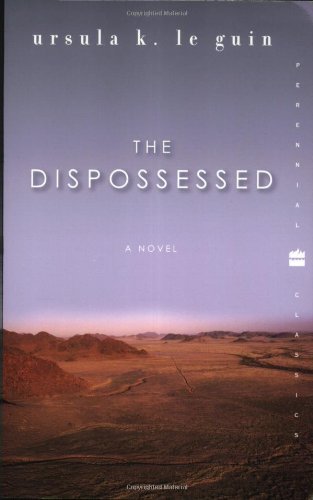
The Dispossessed (published in 1974)
The Word for World is Forest (1976)
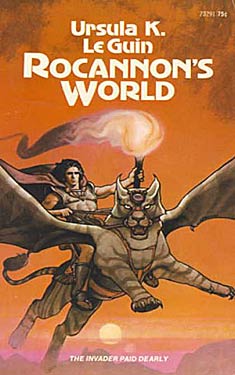
Rocannon's World (1966)


I had a revelation in reading this last one. As far as I have been to tell Rocannon's World was Le Guin's first published novel. And in reading this early work, I realized that up until then, I have thought of UKLG as She Who Can Do No Wrong. As the epitome of excellence in the craft of writing.

But Rocannon's World is a mess.   Let's go on an adventure! Ah, look here at this creature, what will happen in our interacting with it? Interaction. Conflict. Move on to another interesting creature or group of people. What will happen now? And on and on. And all these creatures, all these peoples, all these events, none of them feel fully tied together into a whole. There are some very beautiful passages, and some striking ideas that Le Guin carries on to explore in the later-written novels. But in those later novels every passage is right, is a piece of the whole, is said beautifully, correctly, just as the story needs it to be said.

For me this was an important discovery. Ursula herself learned her craft. She got better. She got fantastic. But she wasn't always fantastic, she seems to have practiced her way there.

Perhaps some of us are gifted with something like a natural talent for story-telling, but we aren't necessarily lost if we haven't been  born into it. We all can practice our way toward excellence.


That was a good thing to be reminded of.

Tonight I finish Planet of Exile. (Which interestingly, though published in the same year as Rocannon's World, is a much more integrated and so more engaging novel.) A quote by Le Guin, from the introduction to this novel, nicely captures what I've been trying to think through here: "I learn by going where I have to go."

Next up: City of Illusions.

Friday, September 20, 2013

Summer Reading or How Books can Save your Life

One of the reasons I love summer is because I have more time for reading. This past summer I noticed a theme running through a number of the stories and novels I was reading: Books and/or writing as life savers. I'll mention three of the bunch here.

Among Others by Jo Walton.

Dan Savage began a YouTube project to help LGBTQIA kids who were being harassed in school. He asked queer adults to talk about how great their lives are now: it will get better, they will find community and through that community love and acceptance. I describe Jo Walton's novel as an "It Gets Better" project for any kid who feels marginalized. Morwenna Phelps finds herself in a boarding school after some very bad stuff happens in her home life. She finds enough solace in Science Fiction to stay sane, but she comes into her own when she finds a Sci-Fi book group in the local town. Books can save you and finding other people who love books can make your life worth living.

Because Mori figures out her life through reflecting on the books she has read or is reading, for me, this novel also served as a primer for the canon of English language Sci-Fi pre-1979. (While most of the books Mori reflects on are science fiction, her own world is infused with fantasy elements--fairies!)

Plus it has an amazing ending in which The Lord of the Rings becomes both weapon and shield.


A Stranger in Olondria by Sofia Samatar.

Jevick was raised on an island with no written language to speak of. His father, a wealthy pepper farmer, decides that it will add to his prestige to teach his son to read and write, and so hires a tutor from Olondria, where reading is commonplace, where books abound. Jevick falls in love with books and eventually makes his way to Olondria. There he is driven to near-insanity by the ghost of young girl from his archipelago. He learns finally that he can approach her not in fear, but in love, when he honors her request to write down her life.  Jevick must save himself and calm his ghost and the only way he can do that is through writing.

For me, the most powerful metaphor in the novel is that books can stand in for our jut, in Jevick's language meaning something like spirit/soul/self. What we put into books gives us, creates, the very best of who we are.


The Drowning Girl by Caitlin R. Kiernan

For the most part India Morgan Phelps controls her schizophrenia with therapy and meds. Until she encounters a naked woman by the side of the road and brings her home. This woman might be a siren or she a wolf. Imp can't figure out what is real and what is not real until she writes a story for each.


All of these books blur the line between magic and insanity. As a reader you're never quite sure: are the main characters crazy? or is the world magic? Or are we crazy and the world is magic? We're crazy because the world is magic? In each, the main character carves out a way to live with insanity/in the crazy world through books and/or writing. Notice even the similarity in the main characters' names in Among Others and The Drowning Girl.

I read these three close on the heels of one other and their similar themes really got to me. I kept feeling like maybe the authors were all part a writing group and decided to write on the same prompt.
Reading them also brought home the idea that we focus on what we love, what is closest to us. When someone in the radio business dies, NPR dedicates disproportional airtime to their remembrance. And wouldn't you say that, pretty much, authors are authors because we love books, we love writing. Because we love books, they show up in our writing. I'm sure there must be novels in which the characters dislike reading, but much more often I see reflections about reading, writing, and books showing up in books.

Books are the love poems we write to the books we have fallen in love with.