Showing posts with label Book Reviews. Show all posts

Friday, January 17, 2014

What Resides in the Gap between the Thought and the Word?

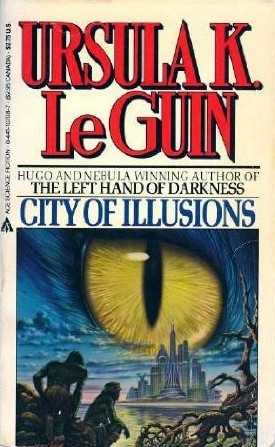
The most recent in my working my through Ursula K. Le Guin's Hainish novels was City of Illusions.

In the Hainish tales many Hilfs (highly intelligent life forms) bespeak: they have the ability to mind-speak and/or mind-hear. And integral to this way of communicating is the collapsing of thought/speech such that lying is not possible. Between the thought and the spoken or written word there is a gap. And in that space a lie can be placed. But to communicate with just the mind, there is no gap, and thus no lie.

The Shing, the enemy of the novel, rule the very sparse population on Earth, perhaps because they may have the ability to lie even when bespeaking. They have one law: Reverence For Life.  Le Guin writes in the introduction that every novel offers the author a chance to do what they could not without it. And the Shing allowed her "the chance to argue inconclusively with the slogan 'reverence for life,' which by leaving out too much lets the lie get in and eat the apple rotten."

These explorations on communication, lying, and gaps also connect up nicely with an observation Le Guin makes in the introduction about the difference between the novel as conceived in the mind, the novel that one is finally able to produce, and how the two never merge.

I'm guessing that every writer feels that gap between the novel as envisioned in thought and the novel that gets written as those mind-scenes travel through the fingers (or through the vocal chords if you use a speech recognition program to write). But I hope we don't always feel that in that gap there resides a lie.

I hope our bodies also have a great deal of wisdom that they offer us as our thoughts move through us on their way to becoming physically present in the world.

I hope there is some electric something that allows the author's words to bridge the gap between their own mind and the minds of their readers, a sparking, sparkling arc connecting us.

I hope there is magic in the gaps. In the gaps between thoughts and words. Between people. Between worlds.


Sunday, January 5, 2014

Eleanor and Park


I recently read the cutest book ever.

The lovely Leann and I were packing for our two day trip to Houston – to watch the Gophers play Syracuse in the Texas Bowl. I was all ready to go and was flipping through the Kindle, looking to see what was there that I hadn’t read. (I rarely find time to read anymore, so I was looking forward to sinking my teeth into something good.) There were a few things I had downloaded a long time ago and couldn’t remember what they were about, so I decided to check out what was on the Amazon store. I was thinking it might be fun to read something sci-fi, but then I saw the editor’s picks section and began to scroll through that. It was lots of literary fiction, and I was kinda meh, but then one cover caught my eye.

So simple. A boy and a girl tied together by their headphones. It hooked me, and after a cursory look at the back cover blurb, I saw it was consistently receiving four and five star reviews. And with a Kindle price of $7.99?

Click-Buy.

So there I was an airplane, an incredibly tiny airplane that was three seats across, too short for me to stand up in, and with a disconcerting steward who sounded exactly like a Transylvanian vampire (I vant to suck your blauhd). I put in my earplugs – because, loud engine right next to my ear – pulled out my Kindle and started reading. And couldn’t put it down. I was reading every spare second, right up until finally finishing it around 1 AM on the day we left.

Eleanor and Park is a beautiful and sweet book that tugged on every single one of my heartstrings. It takes place in Omaha Nebraska, in the mid-80's. Park comes from the perfect family, is good-looking, but his half Korean heritage makes him an outsider (it is the 80's, you know, before that was hot). Eleanor comes from a completely broken family and is a bit on the chubby side.

The book is all about how they fall in love – over music and comic books and of being outsiders. It’s not just first time teenage love, but the real deal kind of love – head over heels soulmate love – with all the ups and downs you to expect, and quite a few you don’t.

It’s a gripping, lovely read.

Saturday, December 7, 2013

Ancillary Justice


My office, left-center

With the advent of my newly indentured servitude in the dusty and shadowed corridors at the Great Institute of Secret Learning and Ancient Knowledge, I've had plenty of time to catch up on my reading while crammed into the moldy dark of the commuter cattle cars with the rest of the plebeian laborers.

And so, I recently finished Ancillary Justice.

It's the first book by Author Ann Leckie. You might have heard something about it not too long ago. It was making quite a splash in the genre-fiction world, gaining the type of pre-release hype a debut author only dreams about. This is how I heard of it and ended up picking it up.

But for our desert island readers, here is what the back cover synopsis had to say:

"On a remote, icy planet, the soldier known as Breq is drawing closer to completing her quest.

Breq is both more than she seems and less than she was. Years ago, she was the Justice of Toren--a colossal starship with an artificial intelligence linking thousands of corpse soldiers in the service of the Radch, the empire that conquered the galaxy.

An act of treachery has ripped it all away, leaving her with only one fragile human body. And only one purpose--to revenge herself on Anaander Mianaai, many-bodied, near-immortal Lord of the Radch."

Weird, huh? Kind of interesting though, right?

I certainly thought so.

So, maybe somewhat unsurprisingly, the synopsis has the long and short of it. The story is about Breq. Breq is a dead person filled with the last remnant of an AI which was once housed in a massive starship and the hundreds of corpses that made up its crew. Its only living crew members had been its officers. During this time, Breq was known as The Justice of Toren, part of a grand fleet on a continuing mission of annexing planets one by one for the galaxy-spanning empire that built her, all in the service of their nearly omni-present and conquering Emperor Anaander Mianaai. But then something happened--something bad, something blood-soaked--and now Breq is all that is left and she is consumed with a thirst for revenge on the Emperor she once bowed to.

So despite the initial odd edges and ideas, the book is actually a pretty basic set-up when you get right down to it, but also perhaps unsurprisingly, it's those odd edges that really make it stand apart. They are well-written and smart--if maybe somewhat light on the more exciting "action" descriptions, but that's really only a minor complaint. Ancillary Justice is a fun read, stuffed with ideas and coolness, but it moves at a quick pace.

The really interesting part about this book is that it's all written in the First Person. Okay, sure, that's not all that revolutionary at all, actually, except in this case the POV is from that of an AI that used to be a giant starship, and for a large part of the book, also inhabits multiple bodies simultaneously. It's a testament to Leckie's sure hand that the POV jump between the ship and it's many bodies (or Ancillaries... see what she did there with the title? Eh? Eh?) is not only smooth and easy to follow, but feels natural.

Another interesting aspect--very interesting actually--is that, as a result of being a spaceship in a human body, gender is a confusing idea to Breq, and not always readily apparent to her whenever she has to deal with other humans. It's a bit of an issue for her and she often worries if she's guessing right. And what's really great about that is that the default pronoun she uses in the story ends up being "she". Thus, gender is not only a bit opaque for Breq, but for the reader too. And, much like the multiple POV shifts between the same character in its multiple bodies, it feels very natural. In fact, it didn't take long before I didn't notice the lack of "hes" in the book at all. Really, despite Breq's confusion, the gender of the other characters is not only often easily distinguishable, but it quickly becomes apparent that it doesn't really matter.

It's all very well done. Very impressive.

In the end, I really enjoyed the book. The answer to what's going on and what happened to Breq and why she wants her revenge is interesting and fun. Some folks out there might complain that the book turns out to mostly be a prequel for a greater story yet to be told, but I didn't mind that at all. If that tale is ever shared, I will definitely show up for it. All in all, Ancillary Justice is worth the hype and worth the read.

Very recommended.


Buy it, read it,
Jon

Sunday, July 28, 2013

To Genre, Or Not To Genre


I’ve been thinking a lot about genre lately.

Specifically, genre as it relates to the speculative fiction we write here at the Scribblerati, as well as my Work in Progress, To Kill the Goddess.

Exhibit #1

It all started while reading Life After Life, by Kate Atkinson. This was a recommendation by my editor (I’ve made a habit of asking her what’s good) and I read it over our Fourth of July vacation to San Francisco.

In case you’re not familiar with it, Life After Life is a story about this woman – Ursula – who is reborn into the same body every time she dies. Each life is a redo, starting in the 1920s, and going through World War II or beyond, assuming she lives that long.

It was a fascinating story – mostly. Sometimes she made terrible choices and the story was hard to read, other times she chose better and the book was fun. But the longer it went on, and the more times Ursula died, it became… tedious. This is not to say it was a bad book, or that it was poorly written, because it was none of those things, but the author shied away from getting into why Ursula kept being reborn. What was the point of it all? Was there intent behind this miracle? Was there a lesson to be learned? A change to be made?

None of those questions were answered, and maybe I’m reaching here, but I think I know why. The answer to those questions would have taken the book out of the realm of literary fiction and into genre.

Exhibit #2

My own writing has been coming along quite nicely. I finished a new draft based on my editor’s comments, and now I’m making one last cleanup pass before I send it back to her. The process has taken about six months, which is longer than I’d hoped, but not as long as I’d feared. During that time, I’ve become a whole new writer. I’ve refined and honed my style, vastly improved my self-editing, but the most important thing I’ve learned is how to focus the story around character.

Character, is entirely what Life after Life was about. Ursula was the same character throughout the book, but her character changed (impressive, eh?). In regards to my own work, To Kill the Goddess has (I hope) become as much about the characters in it as it is about the fantastic world they live in, or the terrible/exciting events taking place around them.

A confession

I have – and this is an entirely unexpected development – thought about giving up writing speculative fiction.

It is, I think, a bit of snootiness, and a notion that will fade with time, but there is merit behind the thought. I still think about those cool sci-fi/fantasy things that used to completely melt my butter, but the more I think about character, the less I think about the facets of my story that make it genre.

I see now why so many choose to write literary fiction. There is a purity there, a laser focus on character that can so easily get buried within the fantastic elements of genre.

Genre, whether it’s fantasy, science fiction, dystopia, or something in between, allows the writer to confront their characters with challenges entirely outside the experience of our normal lives.

If I wasn’t writing genre, I could never so completely turn my characters’ lives upside down, not in any sort of way that wasn’t retreading events we’re all intimately familiar with (e.g. World War II), or turning it into a historical fantasy. Genre lets me tell a story that is fresh, engaging, and exciting.

Could I tell a fresh, engaging, and exciting story without writing genre?

Absolutely.

And I might even do that someday.

But I could never write To Kill the Goddess that way.


Sunday, May 5, 2013

Something to Read?


Hey ho, Scribblerati Faithful!

I am pumped! Why? Because spring is here!

Maybe.

I just don’t know. And you know what I mean, right? The weather has just been atrocious. God awful. Horrific.

Now, I have allergies, so I kind of have to live somewhere where everything is dead for several months at a time, and over the years I’ve gotten pretty good about rationalizing the cold, but I’m done. DUN!

So let’s talk about spring, and summer, and sitting on your deck with a cold, sweaty beer, or a sparkling glass of your favorite rosé, AND READING.

Here’s a few ideas for ya.

Gone Girl
Gillian Flynn

Folks, this book is WAY outside my comfort zone. I'm mostly a hard-core sci-fi/fantasy guy, but I read this at the behest of my editor. At first I was like, nuh-uh, but then I decided, why not stretch my wings a little? And besides, it’s hard to read sci-fi/fantasy while you’re writing it.

So I read it, and… this book is the bomb.

For those who don’t know, Gone Girl is about a man and a woman who fall in and out of love. Simple story, right? Not in this case. These people are crazy. CRAAAAZY! It’s an, “I think you need to be on medication,” kind of crazy. Seriously. What they do to one another is just terrible.

But it’s the way the story is told that makes it so great. I don’t want to give anything away, so I won’t say much more than you will love and hate each character in equal measures. You will laugh. You’ll be horrified. And at the end of it all, if you’re like me, you’ll sit there and go, “Huh. That was frakked up.”

And then you’ll try to decide when you’re going to get around to reading it again.

Billy Lynn’s Long Halftime Walk
Ben Fountain

This is another Editor Recommendation.

ALWAYS read those when you get them.

Here’s the story. Billy and his squad are war heroes and they are back from Iraq for two weeks. The book is told entirely within those two weeks, more or less, and you are in Billy’s had the entire time.

The thing that was so fascinating for me about this book is that you are in Billy’s head for the entire time. I know I already said that, but it’s totally worth repeating. You really are in his head. Like, ALL THE TIME. Every minute. Every thought. Everything from the minutia to the profound. Sometimes your heart breaks. Sometimes you laugh so hard that those nearby at the bar turn and look (true story).

There’s this one part, where he and his squad are at the Dallas Cowboys Stadium and they are meeting the Dallas cowboy cheerleaders, where Billy goes on for most of a page about their breasts. It’s so nineteen-year-old guy real, and so crazy hilarious. It brought tears to my eyes.

But trust me, there’s more here than just hormones and boobs. The story has heart, and you will love it.

Hawkeye
Matt Fraction and David Aja

Okay, lest you were worried that I’ve completely lost my geek cred, we’re switching to comics.

I read a bunch of these. Too many, probably. But we likes them, and this is one of my favorites.

I honestly didn’t think I would like this comic because the author, Matt Fraction, isn’t my favorite. But Fraction has nailed Hawkeye, and the artist, David Aja, is exceptionally talented. I don’t know which of them does the paneling/layout, but it’s top-notch. No herky-jerky pacing here, everything is well thought out, making you laugh in one panel and cringe in another.

Of course, every good story is about character, and in this comic Fraction has nailed Hawkeye’s character. Sure, there’s the requisite beat them up / bad guy story arcs, but the heart of this comic is Hawkeye himself. He’s a lovable, good-natured screwup whose mistakes are mostly balanced by his good intentions.

And then there’s the women. They love him, and he can’t stop loving them back, regardless of who it is, or which relationship he’s currently in. Hilarity ensues.

It’s loads of fun. Buy it, take it to the park, and be proud. “Yes, we read comics, and we likes them!”
Friday, April 26, 2013

On Words, Big and Li'l, All Those I do not Know.

In my last two posts, here and here, I reflected on how being thrown out of a story can sometimes be the mark of greatness in that tale. These musings were spurred by a post from Claudia about her love of big words.

I knew reading that post, that I wanted to write a post about my most unique reading experience.

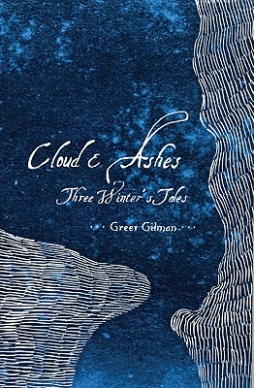
Cloud and Ashes. Three Winter's Tales. By Greer Gilman


I felt in reading this collection of three interrelated stories that I was only understanding a smidgen's worth of the whole. There are many words, both big and small, whose meaning I did not know. Some still elude me, being unable to find them in any dictionary. Here's a sampling, taken from just a couple of pages:

swaling
fells
enneads
limbeck
anneal
besom
hoyden
snecked

But my aren't they pretty words?

Often, even when I knew the words, I didn't fully get the meaning of the sentences.

"And he was leaves. Brown leaves of oak, the lightfall of a thousand hallows. He was galls and tassels, traceries of veining; he was shards of acorns, shales of light. His lady's cups."

I could see that the story was referencing folk tales and Shakespeare and, and, and...., but mostly those references escaped me. Sometimes whole paragraphs escaped me. Pages. And yet...

The girl glanced at Kit. "I see thou's done already what thou can't undo." He felt her eflshot eyes. Her breasts were April, but the eyes were January, haily, and the tongue a cold and clashy March. Scathed, he felt himself, dishevelled in his raffish coat, with moss and toadstools in his hair. Leaves everywhere. And ramping after Thea, like a woodwose in a mumming. Mad for love.

Oddly enough, I love this novel. Because in reading this thing that I could not understand very well, I still felt it. There is a beauty and a melencholy that runs throughout and it was as though with the reading of each word, I was a bell that that word rang. A bell whose call would tear at your heart, sounding out low over the moor. A bell that weeped for things what cannot be undone.

It was curious, this not understanding/understanding. And I was so mesmerized by the language of the words, phrases, sentences I didn't mind not being able know. For me it was a book that wasn't at all about the head, it was about the gut. And it was my gut that kept me reading.

I'll end with a final selection. As you read it see if you can stop reading halfway through. I know I can't. Write me a comment and let me know. See if you can figure out why it wraps you up and won't let go. I think one reason is obvious, but I don't want to give it away.

The whitehaired child had slipped his lead; he whirled and jangled as he ran. His hair was flakes of light. He whirled unheeding on the moor. And childlike fell away from him, like clouds before the moon, the moon a hare, the hare a child. He lowped and whirled and ranted. Whin caught him; he was light, and turning in her blood to sun. He bore it. By its light, she saw the beggar's shadow, like a raven on the rimy earth, that hopped and jerked a shining in its neb, a glass. A thief! the raven cried. Whin stood, as if the cry had caught her, in the whirring of the light like wings, a storm of wings; held fast. The child was burning in her hands, becoming and becoming fire. And she herself was changing. She was stone; within her, seed on seed of crystal rimed, refracted. She was nightfall, with a keel of moon, and branching into stars. She was wood and rooted; from her branches sprang the light, the misselchild. In that shining she was eyes of leaves, and saw her old love's blood, like holly on the snow.

This is a novel for life. To be kept at my bedside and pondered over for all the years to come.

Wednesday, November 30, 2011

My pseudo-review of Tahereh Mafi’s Shatter Me

Disclaimer: this isn't a real review, hence the pseudo. It's also spoiler free. I've tried doing a couple book reviews, but as a writer, I feel all kinda queeby about it. I'd rather just tell you all what I like, and what I thought was interesting and what my writer brain latched onto while reading it. So here goes…


Shatter Me, in my mind, has two very distinct sections: the first three fourths, and the rest. I'll speak about them both individually.

The first three fourths of Shatter Me is a dystopian nightmare. It depicts a horrible not too distant and entirely plausible future where our hero, Juliette, is imprisoned in solitary confinement and is going insane. It is shocking, terrible, and gutwrenching.

But having said all that...

I COULDN'T PUT IT DOWN.

By chapter 2 I was hooked and I didn't leave the couch for three hours. I finished it in two more sittings. This is UNHEARD OF for me.

But back to the book. As the story progresses, Juliette gets a visitor, and that's where things really start to get interesting. I'm not going to go into all the details, I don't want to spoil it, but suffice it to say that along the way we learn things about Juliette, and her visitor, and the world in which she lives and, oh yah, did I say I couldn't put it down? Because it's AMAZING!

The last quarter of the book caught me off guard. Again, no spoilers here, but Shatter Me took a real drastic change in tone and direction. I've never listened to any interviews with Tahereh Mafi and so I don't know this for a fact, but it seems that this was done to set up the sequel's. It wasn't necessarily a bad thing, but it was unexpected and I don't think I would have wrote the same ending. But maybe that's what she intended all along and I don't know what I'm talking about. Entirely possible!

So now for the big question: will I buy the sequel? Abso-frakking-lutely! I wouldn't typically buy a book of the genre set up at the end, but Shatter Me is such a tour de force that the writer in me wants to know what Tahereh Mafi is going to do next.

And don't tell anyone, but I may have a little bit of a fan boy thing starting up here. :-O

PS - more later on Shatter Me and YA in general.

Tuesday, October 18, 2011

Hyperion


First of all, to those of you who thought this was an obituary blog, this post has nothing to do with anyone who has died. So, my apologies.

For the rest of you – score! Once again this blog is about writing!

Sorta.

Actually, this particular post is about reading. Specifically, the fact that I actually read a book. I think this is my second or third book this year, which is both shocking and exciting. Shocking for the obvious reasons, and exciting because with Two Kill the Goddess out of the way I actually have time to do something besides work, say hi to my lovely wife, sleep, eat, write, and do a bit of yoga.

So what did I choose for this momentous occasion? An old book, one I've talked about before: Dan Simmons’ Hyperion.

I first read this book – when was it? Let's see… Looks like this edition was printed in March of 1990. That would be after it won that year's Hugo Award. Let's just say it was a long time ago.

Now, with some of the things I've gone back and recently reread, I have been somewhat disappointed. Case in point: Margaret Weis and Tracy Hickman’s Dragon Lance saga. Holy crap did I geek out over those when I was a teenager. I mean, who doesn't love Raistlin? Another good example would be Melanie Rawn’s Dragon Prince, etc. which was a staple of my early college years. None of those really turn my crank the way they used to. I still like the stories and they do have sentimental value, but now whenever I read my Scribblerati brain turns on and I begin to critique. That was especially detrimental in the case of Dragon Lance, somewhat less so with Melanie Rawn’s work. Some of that, I think, is maturing, but a lot of it is that I now recognize that those books weren't as well-written as I thought they were. They were great stories, but they weren't as well executed as my Scribblerati brain would like.

Dan Simmons’ Hyperion has none of those problems. In fact, I'm even more in awe of this guy's writing now that I was a bajillion years ago. My book, To Kill the Goddess, with its multiple character viewpoints and sprawling world building, rivals Hyperion in complexity, but Dan Simmons takes what I've struggled with and makes it look easy. Hyperion is at once horrifying, mesmerizing, inspiring, and beautiful. And I’m jealous. ;-)

Go buy a copy while you can still find one to put on your bookshelf. You'll be glad you did.

Thursday, June 2, 2011

Book Review: Lyda Morehouse’s Resurrection Code

I used to be a voracious reader. I wasn't a fast reader, but I was dedicated, and like the proverbial turtle, I made the finish line more often than most. I couldn't even tell you how many books I've read in my lifetime, but I wouldn't be at all surprised if that number is in the high hundreds.

Writing has changed all that. I now spend the vast majority of my time writing and I bet I haven't read more than a dozen books in the last three years. So you can understand how excited I get when I actually have an opportunity to do some serious reading, like on a vacation. I try to choose my books carefully, but more often than not I find myself underwhelmed or flat-out disappointed.


My latest read, consumed by the pool in Vegas, was Lyda Morehouse’s Resurrection Code. Resurrection Code is a fun, exciting, thought-provoking dose of boo-yah! in a marketplace overrun by safe, unexceptional, and unoriginal fare. It's also, in my humble opinion, the best book Lyda has written in several years.

Resurrection Code is billed as a prequel to the other four books in her Angel Link universe but it also works as – if not quite a sequel – a coda to what came before. The book starts out in the present with Mouse (international hacker extraordinaire), Page (the sentient AI Mouse created), and Dierdre (PI with an Angel fetish) but doesn't waste time before flashing to the prequel. The story weaves back and forth between coda and prequel, and Lyda manages to intertwine the stories with polished ease. The coda story starts like a walk in the park with old friends, then quickly develops into a story in its own right, but the heart of the book is the prequel, which takes us into a part of the Angel Link universe that the previous books only gave us the barest glimpses of.

That this was the first book in the Angel Link universe in several years was immediately obvious. Maybe it's just that I haven't read one of those books in a long time, but I felt that the tone of Resurrection Code was colored by Lyda’s experience writing as Tate Hallaway. Turns out that color is a good thing. I felt like there was a new, natural whimsy to the writing that enhanced, rather detracted from the serious nature of the underlying themes.

Did I say themes? All good science fiction has an underlying theme and Resurrection Code is no exception. In this case that theme is gender, or more specifically, transgender. Without giving anything away, the prequel story features a heretofore unknown transgender character. There's a bit of romance, and while it's sweet, the story doesn't shy away from the realities faced by our transgender brothers and sisters. This story challenges your preconceptions and makes you think. That also is a good thing.

Is there anything didn't I like? I could've done without some of the pop culture nods, particularly the zombies, which felt a little crowbarred in, but that’s a giant nit pick among nits. And now I'm remembering the Battlestar Galactica reference - that was full of awesome, so I guess I’m Mr. Inconsistent.

What was my favorite thing? I have two. The first was Page’s commentary to the Mouse interviews that begin each chapter. Hilarious! The second is Morningstar. That’s Satan to the rest of you. Not a pitchfork and horns Satan, but an approachable – dare I say sexy? –Satan who all too often reminds us of ourselves.

In closing, go buy it. You won't be disappointed.

Disclaimer: I know Lyda. Were not bosom buddies (heh, I said bosom) but we’ve shared a laugh or two, so take that for whatever it's worth. Even so, I'm not afraid to dish out criticism where appropriate. Just ask my fellow Scribblerati!

** UPDATE 6-5-11: So, while this comment was fun to write "in a marketplace overrun by safe, unexceptional, and unoriginal fare" it's not fair to those of you working hard to write, publish, etc. I'm sure there's great stuff out there, I just haven't stumbled on to much of it and that's more my fault than anyone else's.

I feel better now - conscience absolved! :-P